Category Archives: Audio

LG V10 – How to turbo charge the Sabre Hi-Fi DAC sound quality


If you read my review of the LG V10, if not click HERE , you will have read that it has a Sabre 32bit Hi-Fi DAC. This means the V10 has a special high impedance mode for headphones from 50-300 ohms. 

With 50 ohm plus rated headphones, the V10 turns into a stunning digital audio player with lots of power and volume. It still sounds good in low impedance mode, but it’s worth triggering the high impedance mode to witness the difference. 

On XDA Developers somebody developed an app to trick the phone into the high impedance mode. I tried this app and it does t work. It also has other side effects reported by others. 

However, there is a much easier way to put the V10 into high impedance mode. This is achieved using an adapter. Being more precise you need a 10 cm 3.5mm Male to 3.5mm Female Auxiliary 4-Conductor TRRS Stereo Audio Extension Cable adapter as shown in the photo. You plug the adapter into the V10 first. This puts the V10 in AUX mode and switches the DAC to high impedance mode. Then plug your headphones into the adapter.  I would recommend dropping the volume right down to 15 out of 100 before you play any music as the potential volume in high impedance mode is massive. Just one small note is high impedance mode uses more battery. 

I bought a FosPower cable as shown above from Amazon. Including delivery it cost £4.99. Link below. As it came from the USA it did take a few weeks to arrive. 

FosPower cable for the LG V10 from Amazon UK

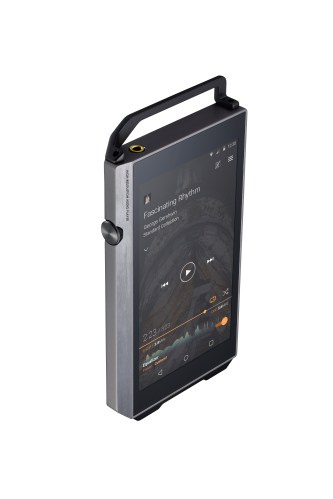
Pioneer XDP-100R Digital Audio Player – The First Digital Audio Player with MQA – My review 


Welcome to my review of the Pioneer XDP-100R Digital Audio Player.  The Pioneer XDP-100R is Pioneer’s first high-resolution portable music player. It is also the world’s first Hi-Res Digital Audio Player to support MQA technology. The Pionner XDP-100R retails for £499.

Master Quality Authenticated is a new music codec that packages Hi-Res and lossless files in a way that takes up significantly less space than current Hi-Res codecs. It is like the music is zipped and during playback gets unzipped. The other aspect of MQA is that it can still play on non MQA supported devices, albeit not at the same level of quality.

MQA can also be used in streaming services. That means much lower downloads too. Tidal is planning to support the MQA format in due course.

MQA support will arrive on the Pioneer XDP-100R via a firmware update fairly shortly.


The XDP-100R is extremely well built using an aluminium frame. Just look at the photos. It has removable bumpers on the top and bottom of the device to stop headphones and the micro usb cable placing strain on the input sockets. That is a really neat touch.

The bottom edge also houses the loudspeaker. On the right hand side you have 2 micro SD card slots, music controls and the power standby buttons. The top is purely for the headphone jack and the left hand side is the volume control.

The Key Specifications –

– Aluminium build for extended durability strength with removable bumpers
– 4.7 inch (1280 x 720) touch screen for easily navigating music les
32GB Internal storage (Max 432GB capacity with 2 expandable SD slots)
Two (2) SD card slots for extended storage (Max 400GB/200 x2, Micro SDXC type)
– Built-In Wi-Fi® (802.11b/g/n or 802.11ac)
– Built-In Bluetooth® with aptX® (A2DP, AVRCP, HSP, OPP, HID, PAN)
– Built-in speaker
– 3.5mm Stereo Phone out
Micro USB B/OTG Digital out
– Battery Life: 16 hours (96kHz/24bit Playback)
Separate DAC/AMP circuit board and CPU circuit board
– Available in Black (XDP-100R-K) and in Silver (XDP-100R-S)
ESS SABRE® DAC ES9018K2M
Headphone AMP SABRE 9601K
– Qualcomm® APZ8074 Processor (2.2 gHz Krait 400 Quad-core, AdrenoTM 330 GPU 450 mHz)
Android 5.1.1 with Google Play
– X-DAP Link for content le transfer (PC to DAP)
– OnkyoMusic.com Direct Download
– Output Power – 75mW + 75mW 32 ohm
– Impedance Support – 16-300 ohm
MQA® playback support (with firmware update) DSD File Playback: Convert to PCM 192 kHz/24-bit (3.5mm Phone/Line-out mode)
– Up to 11.2 MHZ DoP/ Direct Transfer and Up to 5.6/2.8 MHz DoP/ Direct Transfer/ PCM (Micro USB-B)
– Hi Res file Playback:
– Up to 192 kHz/24-bit 32-bit Integer/ oat 24-bit down convert (3.5mm Phone/Line-out mode)
-Up to 384kHz/24-bit 32-bit Integer/ oat 24-bit down convert (Micro USB-B)
Sound Arrange Function:
– Up-Sampling 192kHz/24-bit (3.5mm Phone/Line-out mode)
– Up-Sampling 384Hz/24-bit Real-time DSD Convert 5.6MHz (Micro USB-B)
Six built-in sound adjustments (Lock range adjust, digital lter, upsampling to 384 kHz, Realtime DSD conversion to 5.6 MHz, High Precision EQ, Club Sound Boost)

Notes for this Review

FLAC and MP3 songs were used for this review. MP3 songs at 320 bit rate.

Headphones used included Sennheiser HD598se, Dunu Titan 5, Denon MM400, Audio Technica M50x and Sony XBA-A2.

Bluetooth headphones used were Plantronics BackBeat Pro and Lindy BNX-60.

The Operating System


Pioneer made a good choice and based the DAP on Google Android 5.1.1. That means that in addition to your own music you can stream music from all your favourites places. Tidal, Spotify and Qobuz are preinstalled.

APT-X is present for using Bluetooth. WiFi and DLNA is also present so streaming music to another device is possible.

The Pioneer XDP-100R runs a near stock version of android. Extra apps include Pioneer’s own music app and the Onkyo Music store app. This means you can buy Hi-Res music on the XDP-100R, then download and start enjoying your purchased music immediately.

The Sound Quality and Operation

The Pioneer will plays lots of different formats from MP3s to 24-bit/384kHz FLAC, DSD, WAV and AIFF files. The DAP has 32gb on board storage. You can then insert 2 x 200gb micro SD cards. Battery life is stated at 16 hours. In testing I achieved 12-13 hours but I was playing around a lot with the DAP.

Pioneer has included their own music app. And it’s seriously fantastic. And looks the business. You have tons of different ways to find your music. Upsampling options, club sound boost mode options , equaliser, crossfade, gain, USB Audio, digital filter options and much more. I like the fact that the song artwork becomes your home screen wallpaper automatically. This can be prevented if required. 

Playback via Bluetooth

APT-X is present for audio playback and the sound quality was superb using this method. For this test I listened to a number of different genres. I do like the fact that bluetooth is an option on this DAP. It really adds to its versatility. 

Playback via Wired Headphones

This is where the XDP-100R shines. As I mentioned above I tested the DAP with a range of different headphones to establish an overall opinion. 

FLAC – The Humming by Enza – The Pioneer recreates the delicacy of Enya’s voice superbly. The bass, treble and mids are all on the mark. It is worth pointing out that the volume increases from zero to 160 in small steps, allowing for precision volume control of all of your headphones. 

FLAC – Paavo Jarvi – Frankfurt Radio Symphony – Symphony No 1 in G Minor Op. 7 1 Allegro Orgoglioso – As the music escalates , the Pioneer XDP-100R keeps up nicely and delivers plenty of extra oomph as required. The sound is well balanced across all frequencies.  The sound field was reasonably wide too.

FLAC – Stravinsky Chamber Orchestra- Schindlers List – the piano is so moving. And delicate and precise. Wow. 

MP3 – Michael Buble – Feeling Good – Oh gosh Michael’s voice is delivered with such authority, slam and attack. The bass is fantastic. Accurate and firm and not over the top. 

MP3 – Nina Simone – The Other Volume – Nina’s voice is reproduced so well and with such musicality and feeling. The piano and other instruments are all clearly heard too. 

MP3 – Paloma Faith – Can’t Rely on You – a punchy powerful reproduction with the XDP-100R. All the vocals are superb with a strong bass line. 

MP3 – Muse – Defector – A powerful musical rock performance by the Pioneer. Stunning. 

MP3 – Gypsy Kings – Moorea – the guitar playback and rythym is beautiful. 

In fact my main takeaway with the Pioneer XDP-100R is the fact it possesses such musical, engaging and powerful sound qualities. I found I could close my eyes for hours and hours and enter a different world. 

All my headphones sounded brilliant with the Pioneer. The Sony XBA-A2 are fairly bass neutral / light but with the Pioneer they came alive. The Pioneer possesses superb bass attack, treble and mid range. Where appropriate the sound stage is dynamic and wide. The toe tapping musicality of this device makes this one additive machine. 

Conclusion

The Pionner XDP-100R is a great entry by Pioneer into the personal digital audio space. It is future proof with MQA codec support and versatile with WiFi, DLNA and Bluetooth APT-X and the ability to add 2 high capacity micro SD card support. In addition, it offers superb sound quality making the whole package rather attractive. Highly recommended.

Pioneer XDP-100R-K High Resolution Digital Audio Player deal on Amazon UK

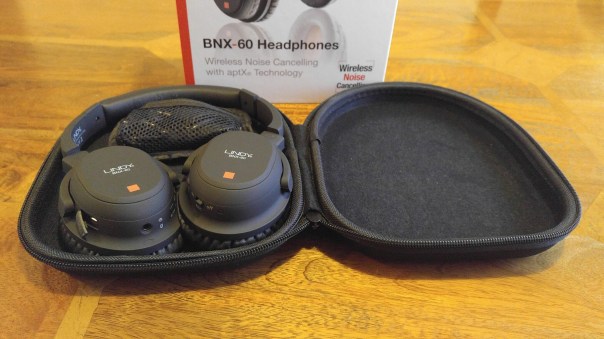
Lindy BNX-60 – Wireless Noise Cancelling Headphones – My Review


Welcome to my review of the brand new Lindy BNX-60 bluetooth wireless headphones with noise cancellation and APT-X.  


The Lindy BNX-60 are the latest wireless headphones from Lindy just announced at CES 2016.

In the Box

– BNX-60 Headphones
– 1.5m audio cable with 3.5mm jack
– 1/4” stereo-plug adapter
– Dual-plug flight adapter
– Micro USB charging cable 80cm
– Hard carry EVA case with mesh pouch
– User manual

Key Specifications

– 10m Wireless Range (depending on environment)
– 40mm high output drivers with neodymium magnets
– Impedance: 32Ohm passive mode / 100Ohm Active Noise Cancelling mode
– Sensitivity (1mW@1KHz ±3dB): Passive 93dB ANC 103dB Bass 104dB
– Nominal THD: Passive <0.1%@ 1KHz / Active <0.5% @ 1KHz
– Frequency response: 20Hz – 20KHz
– Built-in 3.7V 320mA Lithium Polymer Battery
– Battery Life: 30Hr ANC Only, 15Hr Wireless Only, 12Hr ANC & Wireless
– Charges via USB Micro-B, approximately 3 hours to fully charge
– Integrated Audio (FF/RW, Play/Pause) & Handsfree Calling Controls
– Adjustable volume
– 3.5mm Stereo Jack Socket for detachable 3.5mm audio cable

Operation and Sound Quality

The Lindy BNX-60 headphones are very well designed with a lot of thought and attention to the extras included. First up you get a decent hard case. No more worries about breaking these in transit. Secondly, the hard case has a velcro detachable zipped pouch which houses the 3.5mm audio cable, micro USB lead for recharging and the airplane and 6.3mm adapters. I thought the velcro detachable pouch was a neat touch.

As you can see from the photos the headphones have lots of controls on the ear cups. This means you can control your music and take phone calls. Phone calls were clear and the caller at the other end had no problem hearing me. On the right ear cup is the automatic noise cancellation on off switch and volume control.

The automatic noise cancellation can be turned on independently of the bluetooth connection. With the noise cancellation switch on, the sound stage is pushed forward slightly and the treble becomes more pronounced. There is also a very very slight amount of hiss. Lindy state that 85% of low frequency noise is removed. In my testing the headphones did make a noticeable difference removing outside sounds with the noise cancellation switched on. Without the noise cancellation switched on the treble/mid is slightly pushed back in the sound stage. Bass is solid and punchy but not over the top. The BNX-60’s has APT-X which do make a difference if your device also is compatible with APT-X. I also connected the audio cable to my LG V10 smartphone and was surprised that the sound quality was reasonable. I listened to as many different genres as possible and enjoyed the sound produced by the Lindy BNX-60 headphones.

Comfort. The Lindy BNX-60 headphones are light and comfortable to wear.

Conclusion

A versatile solid offering from Lindy Headphones. Comfortable, bluetooth, noise cancellation, APT-X and a carry case makes this a recommendation from me.

LINDY BNX-60 – Bluetooth Wireless Active Noise Cancelling Headphones with aptX deal on Amazon UK

LG V10 Smartphone, Lindy BNX-60 Wireless Headphones and Pioneer XDP-100R Digital Audio Player

Reviews coming up soon on Gavin’s Gadgets.

LG V10 Smartphone

img_2363

Next week my review of the LG V10 smartphone, focusing on what’s different to other flagships by LG, namely the LG G4 and LG Flex 2.

Pioneer XDP-100R Digital Audio Player

XDP-100R-K_1

I have been testing the brand new Pioneer XDP-100R Digital Audio Player will have the review of this stunning piece of audio tech ready to publish either by the end of next week or Monday the week after.

Lindy BNX-60 Wireless Headphones

photostudio_1453889448673

Monday will be the review of the newly announced at CES 2016, the Lindy BNX-60 Wireless headphones.

If you have any questions on any of these items then please let me know and I will attempt to answer them in my reviews.

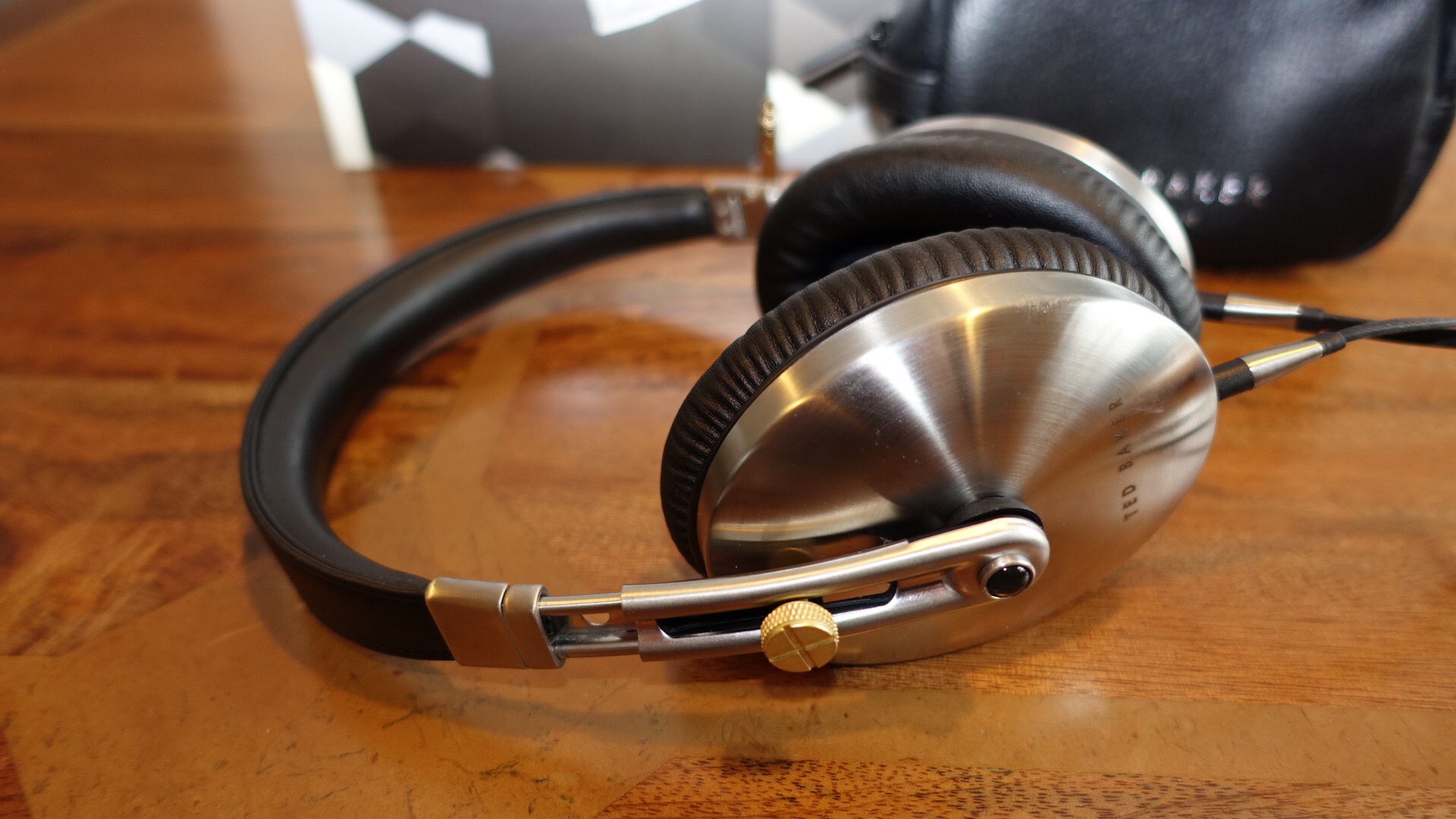
Ted Baker Rockall Headphones – 2 Month Review

  
Welcome to my review of the Ted Baker Rockall headphones. This review is written after spending 2 months with these headphones to allow for a proper burn in period. Ted Baker? Headphones? Surely not? Actually yes.

Apparently Ted Baker designed the Rockall headphones from the ground up to produce a high quality headphone. These have a RRP of £179.99. However, these are available for a lot less. Amazon (link) is selling these currently for as little as £69.99.

The Key Specifications

– Made from brushed stainless steel and soft leather
– Smart foldable construction
– Adjustable sliding headband
– Tangle-resistant cable
– Exceptional sound quality with rich bass
– Apple-compatible remote and microphone allowing call and control functions
– Travel case included
– 1/4 adaptor plug for hi-fi connection
– 40mm driver

As you can see the specification excludes the ohms, frequency range and sensitivity. I could not find this information anywhere on the internet. These headphones are designed to work from Apple iOS devices as the inline remote/mic works fully with iOS devices. On android only the play/pause/mic part works.

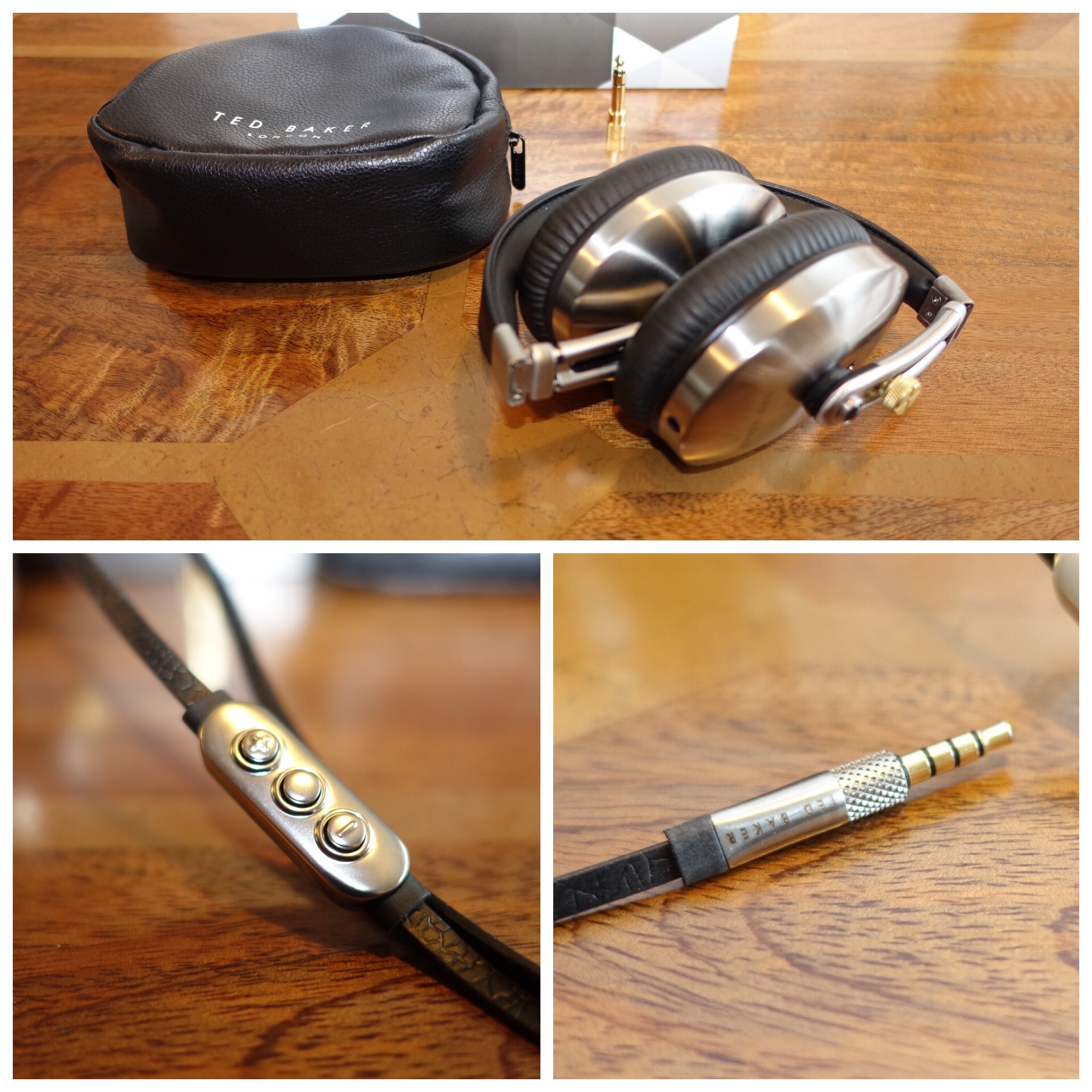
The headphones come in a range of finishes. I have the silver black option, but there are two other finishes brown/silver and gold/white. There are a number of neat design touches with these headphones form leather effect removable cable (handy if you break the cable or want to upgrade it), cool finishes across various parts of the design. See photos below.

  
So they look stylish, but what do the sound like? For a start they are not a Beats sounding headphone with a V shaped bass heavy sound. Quite the opposite. Surprisingly they are fairly neutral, with sub bass only if the track has it. However it did a good job in some areas like female vocal, guitar, instrumental, rock and classical, but with modern pop it sometimes seemed that the mid and treble got lost in the performance and lacked sparkle. If you like dance or trance type music these headphones are NOT for you! Ted Baker obviously designed these to work straight out of the iPhone and for that functionality they work really well. The mic and controls all function just fine and call quality was acceptable. Using the inline controls to control the music also functioned fine. These headphones are not for bass freaks. They do have bass but it a more neutral sound across the spectrum.

In the box you got a 1/4 adapter and a lovely carry case. To fold the headphones into the case, you really need to remove the cable from the headphones. But that is easy to do and makes carrying them a compact affair.

At a RRP of £179.99 there are many better sounding headphones. If you paid £100 for these then would be a reasonable purchase. At £69.99 they become an ever better purchase. I paid £40 in a lightning deal making these unbelievable value. However, these are a fairly neutral sounding headphone, so will not appeal to everyone. But some some, they will be ideal.

Ted Baker Rockall deal at Amazon UK

Feast your eyes on Bluetooth Headphones, Amps, DACs and other great audio gear reviews

Below are all the reviews I have written covering headphones, amps and DACs. I have owned many more headphones not reviewed including Sony MDR-1R, JVC HA-FXZ200, Audio Technica ATH-AD900x, Bose AE2i, Sennheiser HD558, Beyerdynamic DT880 600 ohm, Denon AH-C751s, Sony MDR-EX91, Sennheiser HD415, Fischer Audio FA-011, REO, Sennheiser HD600, Fischer Audio FA-003, Sennheiser PX-200 IIi , Brainwavz B2 and Sennheiser HD202ii, so if you would like to know more about these please ask in the comments.

Previous Amps owned and not reviewed include Sony PHA-1, Fiio E7/E9/E17/E12, Fiio E5, Fiio E11 and Musical Fidelity V-DAC/V-PSU so again if you would like to know more about these please ask a question using the comments section below. Again I have owned many many more audio devices, so please ask if you have any questions.

Digital Audio Players

iBasso DX80 review including using it with a Chord Mojo

Headphone Amps/DACS

Chord Mojo – First Impressions
Oppo HA-1 Headphone DAC review
Oppo HA -2 Portable Amplifier and DAC review
Cayin C5 Portable Headphone amplifier review
Fiio E12 – master review
HiFiMeDIY Sabre Android USB DAC review
Little Dot MKIV Tube Headphone Amplifier review

In-Ear Headphones

Lindy IEM-50X Hi-Fi In Ear Headphone review
August EP610 Bluetooth Headphones – review
Sony XBA-H1 Headphone Review

Bluetooth and or Noise Cancelling Headphones

Lindy Cromo NCX-100 Active Noise Cancelling Headphones review
August EP650 Bluetooth Headphones – review
August EP610 Bluetooth Headphones – review
August EP636 Bluetooth Headphones – review
Plantronics BackBeat Pro bluetooth headphones review
Philips Fidelio M1BT Headphone review
AKG K845 Bluetooth Headphone review
Sony MDR-1RNC – Noise Cancelling Headphone review
Sony SBH80 Bluetooth headphones review

On Ear and Over Ear Headphones

Oppo PM-3 Headphone review
Oppo PM-2 Headphones – First Impressions after 100 hours
Oppo PM-2 Headphone review
V-Moda Crossfade M100 headphone review
Sennheiser HD518 Headphone review
Logitech UE Headphones – 3 part Master review
Audio Technica ATH-AD900x Headphone review

Headphone Cable

Fiio RC-HD1 Headphone cable review

Bluetooth Speaker Systems and Soundbars

Evolve Audio Soundbar SB-2501 review
August SE20 Portable Bluetooth Mini System – review

If you are buying anything on Amazon, please use the link below. This will help support Gavin’s Gadgets with all the running costs and more and won’t be any different in cost. Thanks in advance.

GavGadgets@Amazon

Review Catalogue updates plus new section – updates on Gavin’s Gadgets

Every day  several articles or review go live. The back catalogue of reviews and information is extensive. If you want to find if there is information on a particular topic use the search option (magnifying glass icon) near the top right. 

  
Now if you’re browsing on your PC, Mac, iPad or tablet you should see the above screen layout. Tapping on Menu, Reviews will open up the review menu structure. 

Now if you’re using a mobile device like an iPhone , the mobile version is as below. 


 As you will see there are now 8 review sections. These have been updated to include all the latest published reviews. A new category has been started called “Photography”. 

In the Photography section will be reviews covering mobile photography accessories and or related camera attachments. There are several reviews in this section already. 

The Audio section covers Bluetooth headphones and systems, headphones of all types, amps, DACs and other cool audio gear. As there are over 30 plus reviews I have reorganised this page to make it easier to find exactly what you need. 

The Phones section covering mobile phone reviews across every operating systems , tablets, laptops and more now has over 80 reviews. 

Smart wearables section is expanding and again there are reviews across a number of different platforms. So far there are over 15 reviews. 

Internet of Things is an expanding review section too. 

Accessories is self explanatory. 

The HTC One M7 and M8 section is a dedicated section which is for all the fans who keep reading this content. 

And if you fancy some nostalgic reviews from the post, take a look at the historical reviews. Some real gems in there. 

Going forward in 2016 there will be plenty more reviews too. 

Thank you all for visiting Gavin’s Gadgets. 

iBasso DX80 – Digital Audio Player – My Review + Using the DX80 and Chord Mojo Together! – Updated with New Firmware

Welcome to my review of the brand new digital audio player from iBasso, the iBasso DX80.

  
In the box are a number of accessories, some of which are rather neat –

– iBasso Quick Start Guide
– Warranty Card with individual serial number and date stamp
– Silicon case – this is a neat addition to protect the device
– 80cm micro USB cable – charging, card reader or DAC
– Burn in cable adapter
– Male Coax (RCA) to 3.5mm Mono short cable
– 2 screen protectors. I already have fitted one so all my photos include a protector.
  
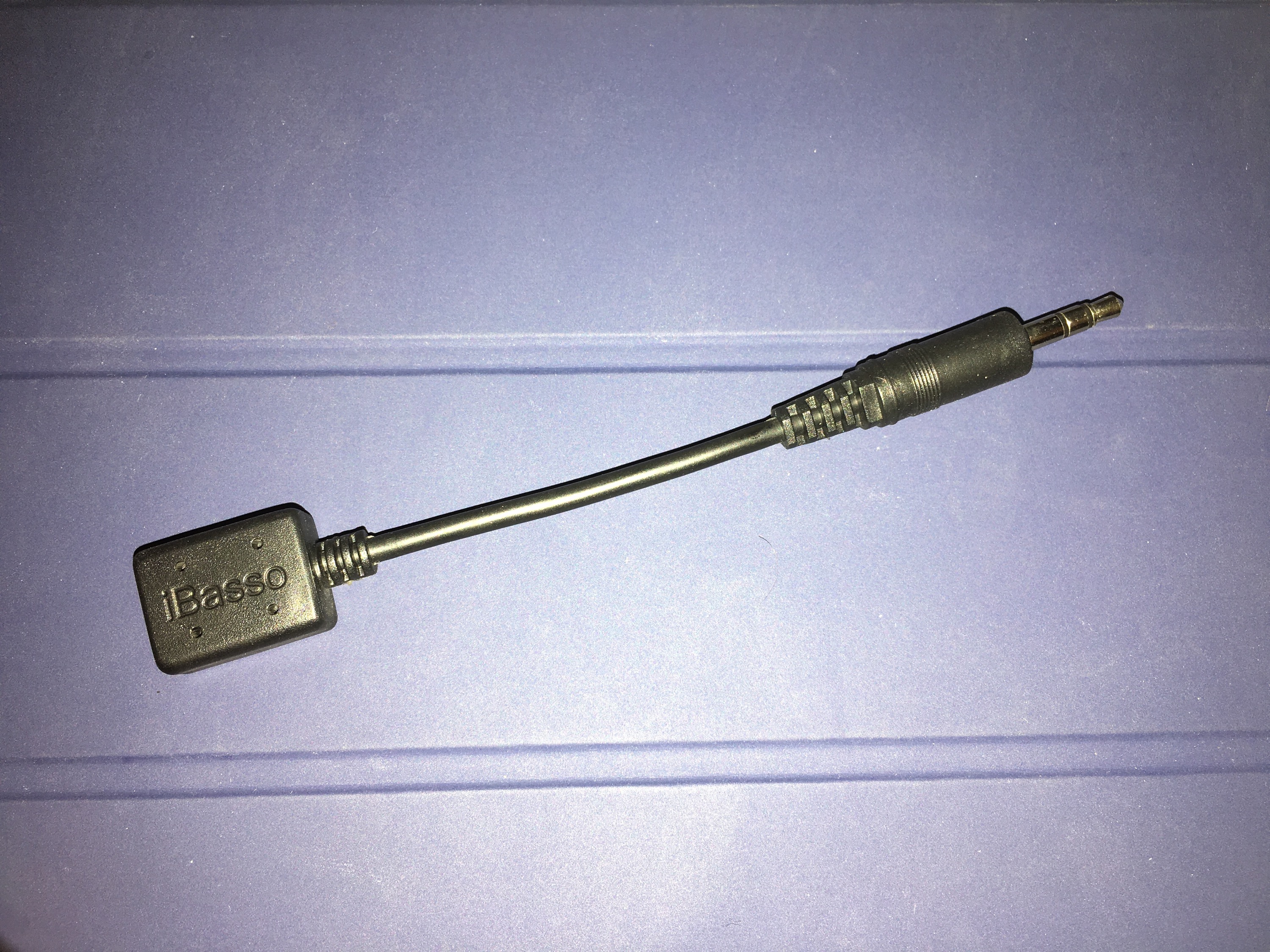
One of the usual pieces included is the burn in cable adapter. iBasso suggest the DX80 needs 50-100 hours to reach its full potential. There are several ways of doing this. One is to plug your headphones into the DAP and play music at a moderate level for 100 hours. The other option is plug this cable adapter into the headphone socket and play music at a moderate volume. No sound will be heard, but the DX80 will be perfectly burned in. When burned in, the DX80 can reach its full sound quality potential since the capacitors will be formed and the electronic components used all stabilised. I have burned the DX80 for over 250 hours before writing this review. There is a difference in the sound experience from trying it straight out of the box to a 100 plus hour burn in.
  
Headphones used for this review are Sennheiser HD598 SE, Audio Technica m50x and Denon AH-MM400.

The key specifications are

– Bit for Bit playback, support for up to 24bit/192kHz. native DSD up to 128x.
– Dual Cirrus CS4398 DAC Chips
– XMOS USB receiver with Thesycon USB Audio driver. Easy to use USB DAC.
– Dual Si TIme MEMS Oscillator
– Built in 10V voltage swing headphone amp with up to 260mW output power
– 3.2 inch screen with a resolution of 480*800 IPS screen.
– Up to 24Bit/192mHz mini optical output/mini coaxial output
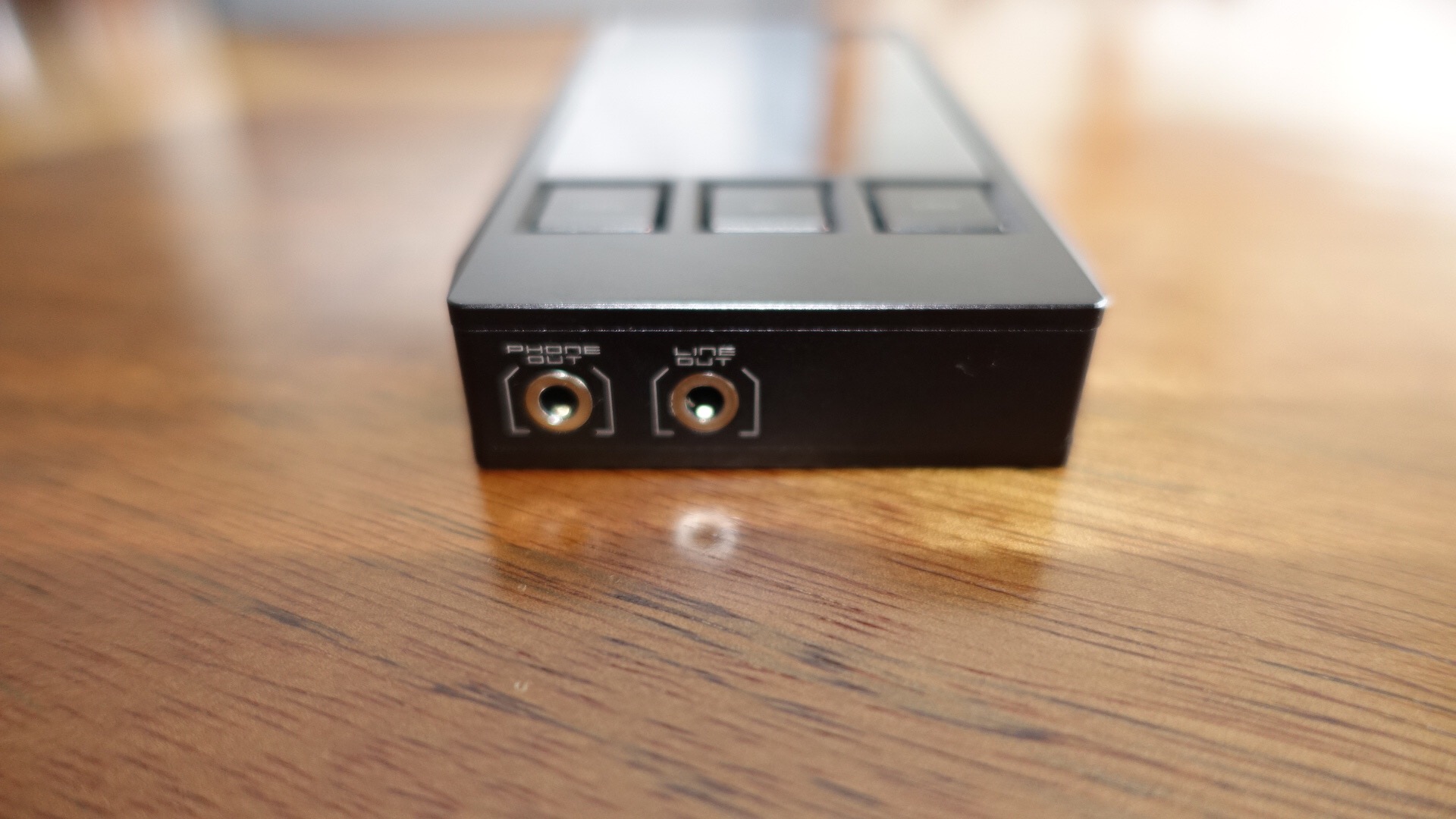
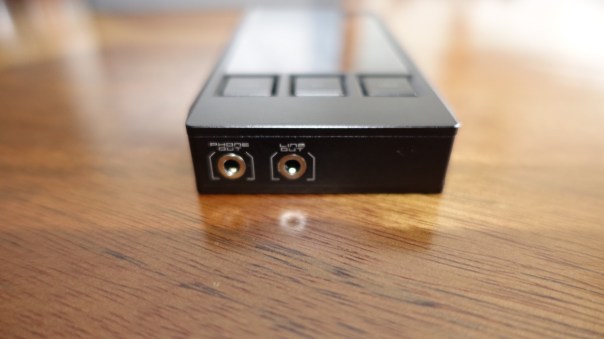
– 3.5mm Headphone output, 3.5mm line out output
– 3 physical buttons for previous, play, pause, next
– 150 step volume control
– eMMC onboard memory
– Dual micro sd card slots, up to 2TB each when cards available
– Audio formats supported – APE, FLAC, WAV, WMA, ALAC, AIFF, OGG, MP3, DFF, DSF, DXD
– Support for M3U playlists
– 3,600mAH battery – 13 hour playback
– Line out has a set voltage – 1.6Erms (1kHz,0db)
– Frequency Response:17Hz ~20KHz +/-0.1dB
– S/N:-116dB +/-1dB
– THD+N: 0.001% Crosstalk: 107d B (1KHz)
– Headphone out: Output Level: 2.9Vrms(32ohm Load).
– 260mW into a 32 ohm load.
– FrequencyResponse: 17Hz~20KHz +/-0.1dB
– S/N: -114dB +/-1dB (32ohm Load)
– THD+N: 0.002% (32ohm load)
– Output Impedance: <0.1ohm
– Size: 120mm x 63.2mm x 16.8mm
– Weight: 178g

First Steps

This is my first Digital Audio Player. I have really wanted to experience an iBasso product but have never taken the leap of faith that says having a dedicated device for playing your music is worth the extra effort required.
  
After the initial charge period, I checked the firmware to see that it was on version 1.12. From reading a few forums, I was aware I needed to update it to 1.14. To do this you have to download this from iBasso’s website and copy it across onto to the second micro SD slot in the root directory. You also need to make sure if you’re on version 1.14 or lower that to update the firmware you need a small sized non SDHC micro sd card. Luckily I had a 16gb card laying around. If your DX80 already has v1.14 you won’t need to worry about this limitation. Basically, each firmware update fixes bugs and adds some new features over time. The firmware update itself is a simple process. The next step is to copy your music across to your micro sd cards. If you’re lucky enough to own 2 x 200gb micro SD cards then you can use these. I am using a 128gb and 64gb micro SD cards.

So how does the DX80 function. It has 3 screens operated via touch. Now Playing, Library, and Settings.

In the library interface you can select between – Now Playing, All Music,Directory, Artists,Album, Playlist and Genre.

Swiping down from the top in Now Playing you get access to some quick settings – gapless, shuffle modes, USB mode, Digital Filter sharp roll off or slow roll off and Gain High or Low.

Swiping across to the Settings menu gets access to the equaliser, l/r balance, gapless, gain, music info on track playing, USB mode, play mode, Digital Filter, Advanced (languages, display, power management, rescan library, system info, system upgrade, factory reset).

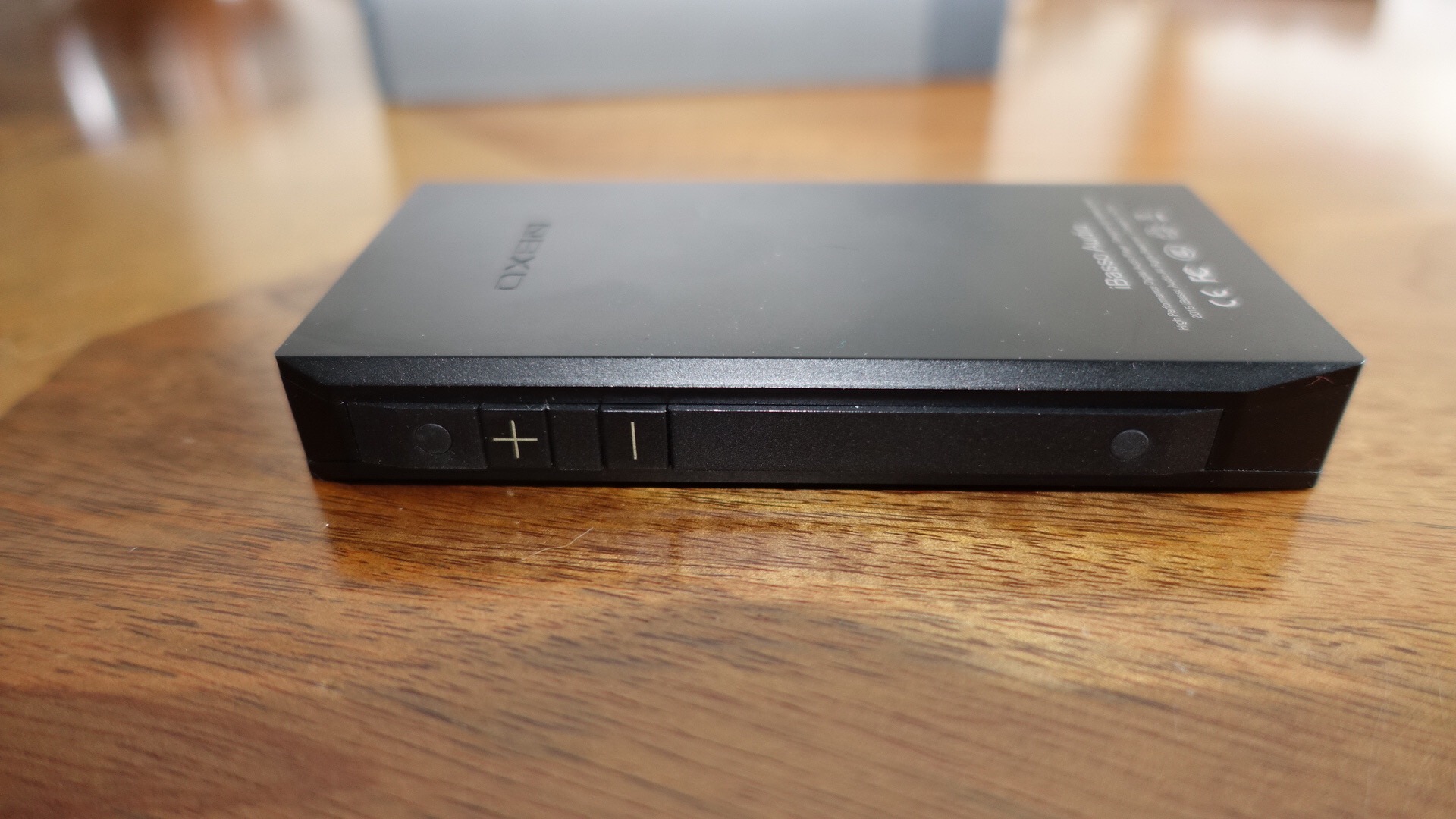
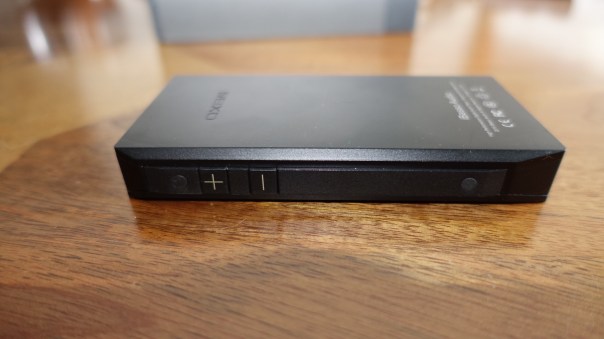
The DX80 also has physical buttons for power off, display off, volume and play/pause and next or previous track. These are really handy to use and one of the aspects that makes using the DX80 a real joy.

Sound Performance and Quality

The user interface is not the most polished but it works fairly well. This is a new device, so based on previous iBasso products will get improved over time. The fit and finish is very distinctive and looks quite chunky in places. But large buttons for the physical music and volume controls do make the DX80 super quick to interact with and skip tracks without looking at the display.

In terms of music playback all 3 headphones I used were driven powerfully with a full range of dynamics and unlike some of my smartphones that simply run out of steam or volume, this won’t happen with the DX80. The DX80 has a decent amount of bass but not OTT at all. If the song has bass the DX80 reproduces it. The performance is full of energy. Playing classical is a joy as there is practically zero hiss at all. In other words a black background. I tried a range of genres to try and trip the DX80. No such luck. I did notice when I had All Music in shuffle mode, that selecting next track ocassionally created a slight audio click but this only occurred during the initial burn in period. Listening to some live jazz was spectacular. Now most of my music is 320mp3 but I did buy a Enya album in FLAC codec from HDTracks. OMFG. Anybody who says FLAC doesn’t sound better is lying unless they have hearing difficulties. However, what I like about the DX80 is its ability to squeeze miracles from MP3 coded songs.

iBasso have included components in the DX80 that are not found until spending 4-8 times more money in other devices. And it shows in terms of audio reproduction. 

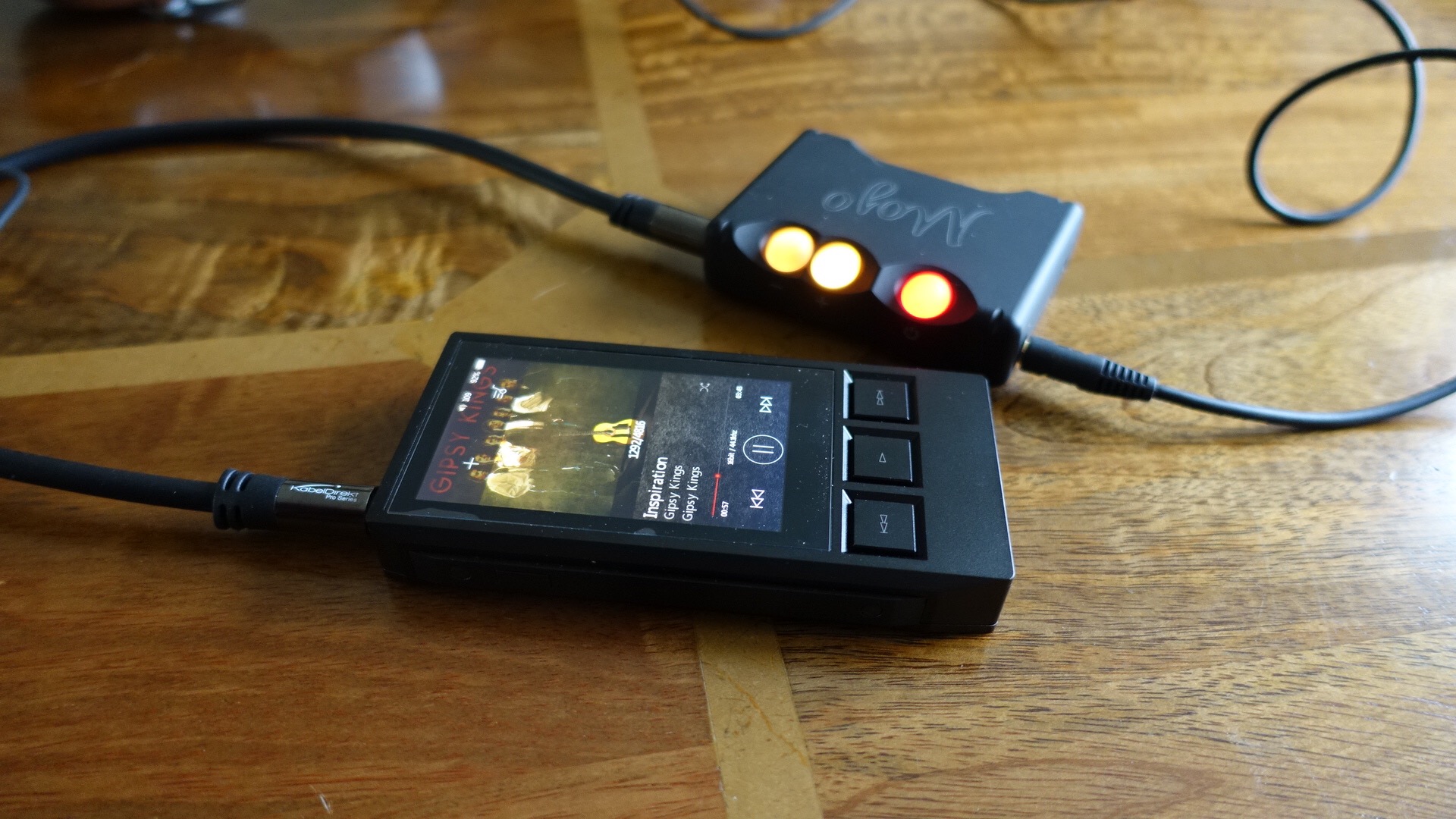
Using the DX80 as a Digital Transport Only with the Chord Mojo

The DX80 has the ability to work as a digital transport only. The Chord Mojo is a new Digital to Analogue Convertor that has been receiving very high acclaim from across the world.
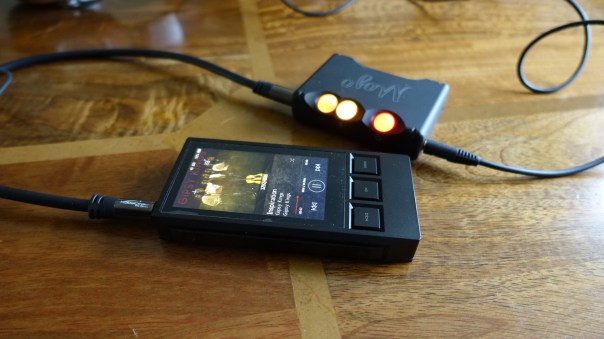
  
So connecting the devices together produces a mesmerising sound between the ears. First of all using the Chord Mojo does marginally reduce the bass but its presentation is more airy, spacious and has an incredible musicality and timing. I actually think the musical timing is so stunning that this is what makes the Chord Mojo special. Now I have tried using the Chord Mojo with other devices like an iPhone 6S Plus or Huawei G8 but the DX80 and Chord Mojo produce knock out punches. Using this combo is like rediscovering your albums!

Conclusion

The iBasso DX80 is a fine piece of kit. The user interface is not as cosmetically pleasing as other devices but it works simply enough. Unless previous firmwares add WiFi there is no option to stream music from Tidal and other services. At around £300 for the DX80 is a fantastic Digital Audio Player if sound quality matters. If you want to take it one step further, adding the £399 Chord Mojo takes the musical experience to another level. If you get the chance to demo the iBasso DX80 and Chord Mojo you really will be surprised. Recommended.

PS. A new firmware update has just been announced to be available within a week. I will update my review with details of the changes.

Update – Firmware v1.2 is now out. Changelog is as follows below. Don’t update to this. It’s a bug fest. 

1. Fix the line output bug when the DX80 is used as a USB-DAC.
2. Enable sorting function on Now Playing.
3. Change from file name to title name on All Music view.
4. A more accurate battery indicator on low battery.
5. Improved M3U playlist import function, allows an apostrophe on file name.
6. Improved WAV ID3 support.
7. Allow custom wallpaper be read from either SD card slot.
8. Allow the player to display Hebrew.
9. Scroll bar added to all of My Music views.

Deals on iBasso DX80 24bit/192kHz Digital Audio Player at Amazon UK

Sony MDR-1RNC ActiveNoise Cancelling Headphones – 3 Month Review

IMG_1074

Welcome to my review of the Sony MDR-1RNC Active Noise Cancelling headphones which include Sony’s S-Master Digital Amplifier, DSEE (digital sound enhancing engine) and active noise cancellation. These headphones are Sony’s flagship prestige over the ear noise cancelling headphones that come with a RRP of £499. I have provided a link to Amazon at the end where you can buy these for under £200 at the moment.

To ensure this review was fair, I have used these for 3 months before scribbling my thoughts down on paper. Headphones benefit from a burn in period of around 20 to 100 hours.

IMG_1075

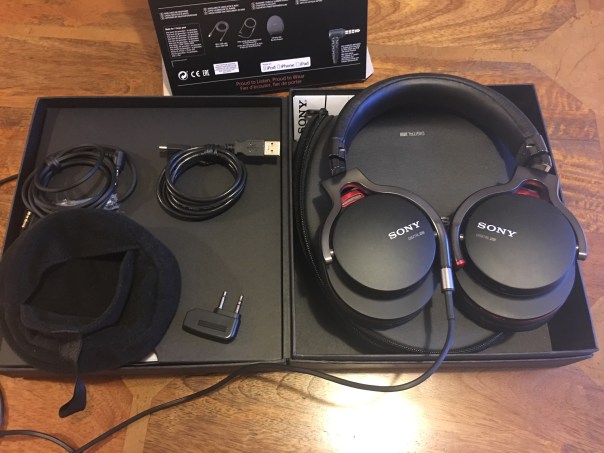
Sony don’t scrimp with the box contents. You get a lovely carry case, an iPhone cable or a straight cable, flight adapter, manuals, micro usb charging lead and a little pouch to put all the accessories into which in turn fits inside the carry case.

You will notice the headphone pads from the photo above. These are the most comfortable to wear headphones I have ever worn. You will also notice the headphones fold flat to fit inside their carry case.

Before I carry on let’s take a look at the full specifications –

– Type – Closed
– Diaphragm – Liquid Crystal Polymer Film Diaphragm
– Driver Unit – 50mm
– Frequency Response – 5-24,000Hz
– Impedance – Power ON 51 ohm, OFF 19 ohm (at 1kHz)
– Sensitivities – Power ON 103 dB/mW, OFF 100 dB/mW
– Cord Type – PCOCC 1.2m
– Capacity – 100mW
– Magnet – Neodymium
– Weight – 330g
– Usage – 22 hours

IMG_1077

IMG_1078

Sony describe the MDR-1RNC headphones as noise-cancelling headphones with Dual Noise Sensor and Digital Sound Enhancement Engine that eliminate 99.7% of all sounds. What actually happens is that when you turn on the noise cancellation the microphones quickly access your environment and automatically adapt the level and type of noise cancellation accordingly. So for example, when I was on a plane its adjusted the noise cancellation for aeroplane engine noise. If you had screeching cars, barking dogs and train noise this all would be removed/reduced. All rather clever stuff.

On this particular flight I was next to the editor of Oxygadgets who had the top of the range Bose noise cancellation headphones. So the obvious thing to do was to compare which headphone a) sounded better and b) removed the most engine noise. We both agreed the Sony did a better job on both accounts, although on just noise cancellation it was fairly close.

Music is about the whole experience brought together in its purest, most natural form and these headphones have been created by music-lovers, then tuned by musicians to give you that in-the-club, at-the-concert feeling and natural sound. They come with liquid crystal polymer film diaphragms and a specially engineered, ultra wideband HD driver which helps deliver precise mid to high range sound and powerful lows. Beat Response Control is included. This features an enlarged air vent,boosts bass while pressure-relieving cushions fit snugly around the ears, sealing in sound.

Finally the S-Master amplifier and Digital Sound Enhancer provides a natural sound with a spacious feel by restoring high frequencies and low amplitude audio lost through compression. So plug these into your iPhone or other mobile device and experience really impressive sound without the disturbance of background noise.

The headphones come with two types of headphone cable, one with iPhone controls and the other without. The iPhone cable has controls for music and taking calls, all of which work really well and calls sounded clear on both ends.

As I said in the beginning I have had these for three months and over time the sound quality has improved more and more. The frequency range is impressive, but more importantly these are a musical and enjoyable headphone to use and directly from your mobile phone. Their comfort is legendary so I found myself wearing these for hours and hours at a time. In terms of bass, if the music has bass, the MDR-1RNC deliver it. Vocals and mids are good too. I do think the S-Master amp and DSEE technology work really well with MP3 or downloadable music which is heavily compressed.

All in all these are might impressive and a highly recommended choose for people that travel and want to remove background noise.

Sony MDR1RNC Noise Cancelling Prestige Headphones – Black on special offer at Amazon UK
So what was the cable? The Answer 


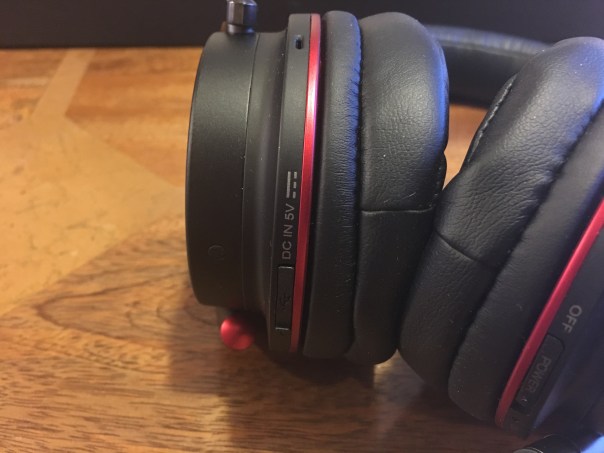
The answer to yesterday’s guess what this cable does is as follows – 
It is an iBasso burn in cable for their new Digital Audio Player (DAP) the iBasso DX80 which I will be reviewing once I have had more time with it. 

The cable is plugged into the headphone socket with the music playing. This allows the burn in process to take place. What does this mean ? The DX80 can reach its full sound quality potential by forming the capacitors and stabilising the electronic components used. 

Another way of burning in the DX80 is plugging normal headphones in with music playing. The cable allows for the process to be done as effectively as possible. 

Some of you were very close guessing it was a burn in cable but suggested it was for the DX90. I’ll allow that as a correct guess 🙂