Category Archives: Audio

Sony Xperia X Performance – Sony’s Latest Flagship Phone reviewed

Sony Xperia X Performance

Welcome to my review of the Sony Xperia X Performance. This is Sony’s current flagship phone. Its design is similar to the Xperia Z series as you can see from the photos. My thanks to Clove Technology .

Sony Xperia X Performance

The Key Specifications

– 64 bit quad-core processor – Qualcomm Snapdragon 820
– 3Gb RAM
– Android 6.0.1
– 23MP 1/2.3 rear camera with Predictive Hybrid Autofocus – Lossless 5x Clear Zoom and <0.1 second autofocus
– 13MP front camera 1/3
– Low-light photography: ISO 12800/3200, SteadyShot with Intelligent Active Mode – video stabilisation, Superior Auto Mode, Full HD 1080p Video Recording, Pulse LED Flash
– 5.0″ Inch 1080 x 1920p Full HD display, 441ppi
– LTE Cat 9 support
– WiFi 802.11 a/ac/b/g/n
– Bluetooth 4.2 with apt-x, A2DP
– NFC
– 32GB storage & micro SD support up to 200GB
– Sony 3D Surround Sound technology (VPT), Clear Audio – Sound improvement software, xLoud™ Experience, DSEE HX, High-res audio
– Fingerprint sensor
– PS4 Remote Play
– Battery 2,700mAh
– IP65/IP68
– Dimensions 143.7 x 70.5 x 8.6 mm
– Weight 165g

Phone Basics

Call quality was good. Cellular, bluetooth and WiFi all worked well and the Sony X Performance maintained a good signal strength compared to my Samsung S7. Screen viewing angles were good and visibility in sunlight was average. Battery life was excellent with a day and a half achievable and 5 hours screen on time, despite its 2,700mAh battery. If I had used some of Sony’s power saving modes, a longer battery life could have been obtained. As an example at 71% battery the estimated time remaining is 101 hours. in ultra stamina mode this increases to 240 hours.

The display is adjustable with an option in the settings for image enhancement, X-Reality for mobile or super vivid mode. The white balance is also adjustable. You can also choose which system icons to display in the status bar.

Sony UI is a fairly light skin with the options of themes too. However, Sony does install a number of apps that could be considered bloatware like Facebook, Amazon Shopping, AVG Protection, Kobo eBooks and Spotify. Others might find it useful that Facebook has been pre installed! Within the settings Sony has included options for pressing power button twice to launch camera, tap to wake and glove mode.

The fingerprint sensor/power button was simply excellent. I never once had a failed reading.

Camera

The camera UI is fully shown in my video review, so please check this out. See below. In the meantime,
here are a range of photos from the Sony X Performance.

Sony Xperia X Performance Camera samples

This shot is to highlight an indoor lighting situation. The glass in the door is quite a bit overexposed.

Sony Xperia X Performance Camera samples

Above is a close up of another green plant leaves.

Sony Xperia X Performance Camera samples

From the same plant, but with different sunlight and shadows.

Sony Xperia X Performance Camera samples

A local church. I wasn’t too happy with this overall shot as it is not quite in focus.

Sony Xperia X Performance Camera samples

The above shot in Newquay beach.

Sony Xperia X Performance Camera samples

Slightly better shot of the church.

Sony Xperia X Performance Camera samples

The above shot is in manual mode, using HDR. 8mp.

Sony Xperia X Performance Camera samples

The above shot is another 8mp manual mode, without HDR. HDR in manual mode has to be switched on.

Sony Xperia X Performance Camera samples

And the last photo, manual mode, no HDR but at the full 23mp. Overall, I was not blown away by the image quality due to issues with Sony’s camera app and software. The actual camera sensor showed that it was capable of taking good shots, of not over exposing, being able to deliver good colours and more. This is why DxOMark gave it the number one scoring, due to the brilliant sensor. But the sensor is not the only part of the camera system. My bugbear was that so many shots were not in focus. The camera app had a mind of its own sometimes. I found issues with focusing at infinity and macro. But when the focus was correct, the actual result could be very good. The camera app does include many modes and options but the Sony X Performance does lag behind the competition as the software is too complex and does not get the basics correct. The manual mode only offered white balance and exposure. ISO could only be manually adjusted if you selected the 8mp photo file size.

In terms of video, I used the Sony X Performance to record 2 reviews. See links below. The audio from the video was ok but the video stabilisation did not help smooth out the footage. Selfies from the 13MP front camera were ok. The main problem is the Samsung Galaxy S7 camera outperforms the X Performance by a fair margin due to its good software and hardware working in unison. I also felt the video linked below was a bit jerky in a few spots despite the phone being on a tripod.

Sony Xperia X Performance – Video Sample 1

Sony Xperia X Performance – Video Sample 2

Audio Quality

This is the highlight of the Sony X Performance. It has stereo speakers which due to the water resistance only reach 78db. Plug in wired headphones or use bluetooth headphones and Sony provide a top notch audio nirvana with loads of options to improve your recorded tracks. See video review for more information.

Conclusion

The camera is the disappointment on this phone. However, there is still plenty to like about the Sony X Performance. It is comfortable to hold and easy to use one handed. It has good battery life and superb audio via headphones and bluetooth audio. Its main problem is its competition which for similar or less money, offer a more compelling phone.

My thanks again to Clove Technology for their great service.

Video Review

Samsung Gear IconX Wireless Headphones review – The headphones with no cables & a heart rate monitor!

Samsung IconX headphones

Welcome to my review of the Samsung Gear IconX, a truly wire free headphone with a built in heart rate and fitness tracker!


Samsung IconX headphones

Key Specifications

– Dimensions – Earbud: 18.9 x 26.4 x 26.0 mm /Case: 35.3 x 30.3 x 92 mm
– Sensor – HR, Accelerometer, Capacitive Touch
– Storage 4GB *Usable memory is less than 3.5GB. *Can play up to 1,000 music tracks.
– Connectivity BT 4.1 (BLE)
– Battery Earbuds: 47mAh / Case: 315mAh
– Water Resistant -Splash Resistant (P2i Nano Coating)
– Audio Spec Frequency Range: 20~20 kHz / Speaker Sensitivity: 89.5 dB ±
– Microphone / 2 per earbud
– Compatibility – Android 4.4, RAM 1.5GB RAM
– Audio Playing Format MP3, M4A, AAC, WAV, WMA (WMA v9)

The Main Review

I will start with my review by saying that the Samsung Gear IconX is the best product I have reviewed in a long time. It is simply genius but also not without faults.

The IconX is totally wire free. There are no wires between the ear buds. The ear buds comes with 3 different size ear tips and wing tips. This means that once fitted in to your ears, they do not fall out. I tried everything to shake these out of my ears but to no avail. Then I did a really sweaty workout to see if sweat would phase them or make them fall out. It didn’t.

When you run with the Gear IconX, you get an in-ear voice guide to help you reach your vigorous-intensity zone. The voice guide is recorded by real human beings in 15 different languages. After a working out you can sync with your smartphone and check your stats and monitor progress on the S Health app.

Whether walking or running, the IconX is smart enough to track your activity and give updates on essential data from speed, distance and duration to heart rate and calories burnt via a dedicated voice guide.

If you are walking or running on the streets and want to hear the sound around you for safety reasons, you can turn on ambient sound in the Gear app on your phone, or by using the touch pad on the IconX.

The battery life is the IconX’s weak point. If you stream music from your phone you will get exactly 90 mins. If you play music directly from the earbuds the battery life increases to 2.5 hours. However, the protective case is also a battery pack and recharges the IconX earbuds 4 times in about an hour. So if you did 4 workouts a week, you would in reality only need to charge the case once. I did also experience a couple of drop outs when streaming music from my phone, and once the left earbud stopped playing music. All I had to do was restart the track.

The controls are simple to use. You select which side earbud you want to use as the control piece. Then with various numbers of taps you can start playing music, skip or rewind tracks, change the volume and even start a workout. You can also turn on ambient mode directly from the earbud or turn it off.

These play music so what do the sound like. Really good to be honest. Natural in their sound reproduction and plenty of volume too. Bass was accurate too. Whilst using these for phone calls, I had no issue hearing the caller and nor did the caller have any issue hearing me.

Do check out the video review as this shows the Gear IconX application and a lot more too!

Conclusion

Once you have used these headphones / fitness tracker, no other product gets close. Despite a few flaws, I highly recommend these big time. Simply an amazing product.

For more info and the latest pricing on Amazon – http://amzn.to/2aHVaFN

Video Review

Pioneer SE-MHR5 Hi-Res Headphones – Review – The Latest Premium Headphone from Pioneer

Pioneer SE MHR5 headphones

Welcome to my review of the Pioneer SE-MHR5 Hi-Res headphones.

As you can see from my photos, the Pioneer SE-MHR5 look really cool. The can be connected in either normal or balanced mode too and come with a carry case/pouch.

Pioneer SE MHR5 headphones

The Key Features

– Fully enclosed dynamic headphones
– Large, 40mm driver
– 45 ohm
– Sensitivity – 102 db
– Weight 240g without cables
– 7 Hz – 50,000 Hz frequency response
– Soft memory foam ear pads and headband ensure comfort during long periods of use
– Comes with two cable options 1) 1.2m cable 3.5mm and 2) 1.2m balanced cable with a 2.5mm super mini plug
– Folds into a compact size for easy storage into the included carry case

Pioneer SE MHR5 headphones

Sound Quality

I spent a considerable amount of time listening to these headphones. I initially connected them to my smartphone and they sounded ok but as soon as I added an external headphone amplifier the SE-MHR5 started to show their colours. Based on my results I would recommend getting a small portable headphone amplifier like the Oppo HA-2. Obviously, using a balanced amplifier improves the performance even more.

Genres. What I did discover with these headphones is their preference to several genres over others. Rock was one area where the headphones could get a bit muddied. But move over to classical or jazz and the music reproduction was beautiful. Full of energy, attack and reasonable sound staging. I loved listening to female singers with these headphones too.

Conclusion

The Pioneer SE-MHR5 are a comfortable to wear headphone that suit classical, jazz, blues, modern and vocal genres really well and have a mesmerising engaging sound especially with classical and jazz. Recommended.

For more information and the latest pricing on Amazon – Click HERE.

Video Review

iBasso D14 Bushmaster High-Performance Stereo DAC & Headphones Amplifier – Review – For iPhone, MAC, Android & PC

Ibasso D14 Bushmaster

Welcome to my review of the iBasso D14 Bushmaster High-Performance Stereo DAC & Headphones Amplifier. The iBasso D14 Bushmaster is ideal for connecting to your iPhone, Android phone, computer or MAC via the lightning, optical, USB or analogue line in port to substantially improve the sound of your headphones.

Key Features and Specifications

– Sabre32 ES9018K2M DAC chip with XMOS USB receiver for superb sound conversion
– Up to 32bit/384kHz PCM signal and native DSD up to 256x directly from computers/mac
– Asynchronous USB transfer
– Works as a DAC for Android smart phones via a USB OTG.
– With Apple Camera Connection Cable works as a DAC with iOS devices
– Built in battery lasts 13 hours as a DAC+AMP combo or 25 hours as just an AMP.
– Other than the USB input the D14 can take up to 24bit/192kHz optical input coaxial input and analogue line in.
– Amp uses an OPAMP based high output headphone amplifier which can output up to 400mW into a 32ohm load.
– Frequency Response 17hz – 20khz DAC, 17hz to 100khz AMP
– Weight 149g
– Dimensions 60mm x 104mm x 20mm
– Recommended Headphones 8 to 300ohm

Ibasso D14 Bushmaster

Audio Quality

iBasso provide many extras with the D14. These include a protective pouch, OTG Mini USB to MicroUSB, Mini USB to USB A,3.5mm analog cable and a 3.5mm SPDIF cable. These are all short length cables. You also get the mini USB cable for recharging. The D14 is fairly neutral sounding with speed and plenty of detail. The mid range and vocals are superb. The D14 has a deep and wide soundstage.

The D14 sound quality improved during the course of its burn in which was around 50 hours. During playback it gets slightly warm but this has absolutely no impact on its performance, quite the opposite actually. iBasso have included many different ways of connecting to the D14 making it fairly versatile.

At its price point of around £175 nothing sounds quite as good. But if you have the budget I would recommend the Oppo HA-2 which costs £259 and is far more smartphone friendly. See my review – Click HERE.

Conclusion

A little bit larger than most portable headphone/DACs and still using mini USB, but well worth the extra bulk as its powers your headphones in a way to reproduce beautiful tunes.

For more info and the latest pricing on Amazon UK – Click HERE.

Video Review

Sennheiser Momentum Wireless 2.0 Headphone Review – The Gold Standard of Bluetooth Headphones

sennheiser Momentum Wireless Headphones

Welcome to my review of the Sennheiser Momentum Wireless 2.0 Bluetooth headphones.

The Key Features

The Sennheiser Momentum Over Ear headphones are a premium bluetooth headphone that come with many features as below. With the rise in popularity of bluetooth headphones and the next iPhone not having a 3.5mm headphone jack, these are one of the best bluetooth headphones for sound quality.

– Closed Circumaural design featuring Bluetooth wireless technology
– 18 ohm high-end transducers to produce high quality audio
– NoiseGuard hybrid active noise cancellation with dual built-in microphones dynamically cancel out external noise for better speech intelligibility
– NFC for quick pairing to smart devices
– Attachable audio cable, in case Bluetooth connectivity is not permitted
– Leather covered memory foam cushions provide higher comfort for long listening sessions
– Folding headband for storage in to the included carry case
– Connect up to two devices simultaneously (phones and computers) and up to eight devices in the pairing list
– 22 hour battery life with Bluetooth and NoiseRad activated

Key Specifications

– Impedance passive 18 ohms, active 480 ohms
– Frequency Range – 16 Hz – 22000 Hz
– Dual omni-directional microphone
– Bluetooth 4.0 + EDR – A2DP + AVRCP + HSP + HFP
– APT-X
– Weight 260g
– In the box – 1.4m audio cable with 3.5mm low-profile angled plug, USB Charging cable,Inflight adapter, Manuals, Carrying case

Sound Quality

I recently reviewed the new flagship bluetooth headphone from Bose, the Bose Quietcomfort 35. Click HERE to read the review. The Bose QC35 cost £100 less than the Sennheiser Momentum headphones and offer better noise cancellation. In fact the noise cancellation on the Bose QC35 is nothing short of miraculous. So I wondered how Sennheiser’s flagship bluetooth headphone would compare.

For starters the Sennheiser Momentums offer a hybrid noise cancellation system. It works but you can still hear noise outside as its not as powerful as that from the Bose QC35. The Sennheiser Momentum cost £100 more than the Bose QC35, costing £379. That is a lot of money! So what extra do you achieve and are they worth £379?

The Sennheiser Momentum are luxuriously built bluetooth headphones with leather pads filled with memory foam, providing superb comfort when worn. APT-X is included for devices that support this standard. The key aspects is the audio quality and the Sennheiser Momentums do not fail to disappoint. They possess superb high quality audio reproduction via bluetooth. As closed back headphones, the music stays within your ears. Bass is fast, deep and punchy. Mids and treble are fantastic.

Connect the supplied audio cable and the sound is even better. I then used an iBasso D14 Headphone amp/dac with these and reproduced even better audio quality. Call quality is excellent. Personally, I have not heard any better sounding bluetooth headphones. But are they worth £379. No I think Sennheiser has been a little greedy. These should be nearer the £300 mark. However, at the moment there is no other option if you want the best audio quality.

Conclusion

The Sennheiser Momentum are expensive bluetooth headphones with noise cancellation. However, they are one of the best sounding headphones and extremely comfortable.

For more info and the latest pricing on Amazon UK – Click HERE.

Video Review

Groov-e Fusion Bluetooth headphones – Go wired or wireless – Ideal for the new iPhone

groov-e fusion headphones

Welcome to my review of the Groov-e Fusion headphones.

The Key features –

– 40mm drivers.
– Super Bass sound
– Impedance 32 ohm
– Frequency 20Hz-20Khz
– Sensitivity 98dB+/-3dB
– Microphone Sensitivity -58dB
– Connect via Bluetooth or via the included removable 3.5mm audio cable.
– Built in microphone so you can receive calls on the go
– 10-12 hours of audio playback
– Swivel soft ear cups offer ease of adjusting headphones. They fold too, making it convenient for travelling.
– Colours – black, gold, silver

The Design

The groov-e fusion headphones are the new headphones from groov-e. With the soon to be released new iPhone which will not have a 3.5mm headphone jack, bluetooth headphones are going to explode in popularity. groov-e believes they have the solution with their new fusion headphones, which will of course work with any phone, device or computer that either has bluetooth audio or a 3.5mm headphone jack. The headphones are made from a lightweight plastic, with swivel folding cups. The cups have soft pads too. The headphones allow for basic controls from play/pause, answer/end call, reject call, skip/rewind tracks, last number dialled and volume up/down.

The Sound Quality

At an official retail price of £34.99 you are not going to get audiophile grade of headphones. What you do get is a fun sound, with the emphasis on bass. Consequently the mids and treble are somewhat recessed at times. I am not aware that these headphones include APT-X codec either. Despite the recessed mids and treble, I did enjoy listening to my music with the headphones especially the sub bass effects when present in the tracks and I can imagine the average consumer would enjoy listening to these too.

I have included a video review of the groov-e fusion headphones below.

Conclusion

The groov-e provide a fun sound, with added sub bass when listening to music. For call quality they offer average call quality. They are not audiophile grade headphones, hence why they cost a modest £34.99.

The official retail price is £34.99 although Amazon currently have the headphones on offer at under £30 in various colours.

For the latest pricing on Amazon UK – Click HERE.

Black Onyx Galaxy Note 7 leaks in all its glory


“Black Onyx Galaxy Note 7 leaks in all its glory!

A new batch of photos has been leaked from China and it shows us the Galaxy Note 7 in Black Onyx. The handset is completely black, even the metal frame is black. Samsung has confirmed that it’s going to formally announce the Galaxy Note 7 at an event in New York City on August 2nd, pricing and availability information will be confirmed after the event. There is also a rumour that it will be available immediately to order.”

Not long now for the big reveal. I must admit I am excited to see what Samsung include with the new Note 7.

More at Sammobile

Sony MDR-XB950BT Bluetooth Headphones – Redefining Bass – First Impressions 

Nothing in life will prepare you for the Sony MDR-XB950BT headphones. Nothing!

The Sony headphones arrived about 3 days ago and I have been putting them through the paces in both Bluetooth and wired mode. 

Some basic specs – 

– Bluetooth with NFC

– 20 hours battery life

– Bass Boost button

– Foldable cups 

– Sensitivty 102 db/mW

– 40mm dynamic driver 

– Frequency range 3 – 28,000 hz with headphones cable, 20 -20,000 hz Bluetooth mode

The very first thing I wanted to do when I received these headphones was pair them to my Samsung Galaxy S7 and listen to the bass these headphones are meant to be able to produce. I think I swore when I first heard them. I then thought the bass boost button was left on, so I pressed it, and OMFG. The bass and sub bass was so extreme my teeth felt like they could rattle. I’ll be honest I don’t use the bass boost button as these headphones produce plenty without it. I do however press it and listen for a few minutes just to bring a smile to my face a few times a day.

Now you can also connect these via the supplied audio cable. Bluetooth turns off. So does the use of the bass boost button. But in wired mode these operate at a gut drawing level of 3 – 28,000 hz. They also sound better too in wired mode. And there is still epic levels of bass. 

Now the cons. I have listened to every genre. Some tracks collapse with the bass levels and sound wrong. But the majority are fine. In fact, in some cases having the extra bass or I should say sub bass adds a whole fun listening level. Some jazz and classical tracks really worked well with these. Some just got swamped with too much bass as the mids got lost. For example Michael Buble, Feeling Good has lots of depth and didn’t get ruined by the extra bass. With dance , rap or electronic music these are like being at a rave or club, and even better if you switch on the bass boost button!

These headphones aren’t for everyone, but I love them. They go against all the rules I believe in, but they add swagger to a lot of my music across many genres that for the times the bass becomes overpowering, I just skip to the next track or lower the bass in the equaliser settings. These are my first impressions, and I will evaluate these for a longer period and report back accordingly.

The question to ask yourself, are you brave enough to own a pair 🙂 

Available from Amazon UK – Click HERE.

Apple iPhone 7 – Hot of the Press – New Lightning Headphones / DACs / Apple’s new MFI Audio Specifications

The next iPhone, the iPhone 7 will remove the 3.5mm headphone jack. Instead it will rely on either bluetooth audio or routing the sound out via the lightning connector. Any headphone utilising the lightning connector will need a DAC (Digital to Analogue Convertor) to convert the digital sound outputted via the lightning connection.

So what is Apple asking manufacturers behind the scenes? What ground rules are Apple requesting or expecting? And what are the pros and cons?

In a thread on Head-Fi, the founder of Fiio audio products created a thread to let everyone know that the company finally after many years of applying for Apple’s MFI Certification got approved. This then revealed some interesting extra bits of information:-

– Each and every potential product has to have the manufacturing and technical information sent across to Apple, thereby revealing any company secrets as to how they made a product sound so good. Chord Audio decided not to get their awarding winning DAC, the Chord Mojo MFI approved for this reason.

– Apple have not even decided what type of product Fiio can manufacture yet.

– Apple are courting headphone manufacturers to make headphones with a lightning connector. Apple are not asking these manufacturers to make an external DAC to connect traditional headphones with a 3.5mm jack.

– Whilst DACS sold by Fiio are at the budget pricing end of the market. Fiio have confirmed that going forward their pricing will increase as they will be forced to purchase lightning connectors and related chips from Apple.

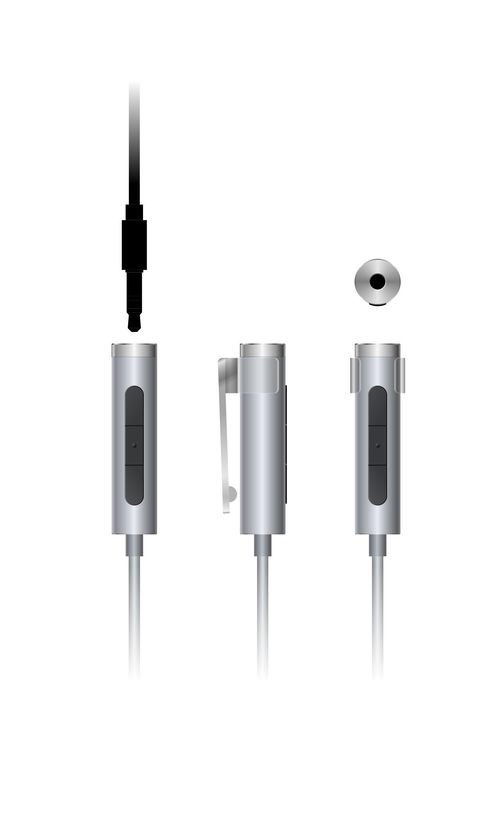
– Fiio are hoping the can work with Apple creating a Lightning DAC as per photo above. This is a slimline DAC with a 3.5mm headphone jack.

– Apple are stipulating the type of product they would like to see. Apple have now asked that all MFi products must includes a LAM ( lightning audio module ) , remote control keys and microphone if the product has headphone out jack. This means that there will not be similar products like the SONY PHA-1/2/3 in the future. This is sad news.

What is frustrating here is Apple have only approved Fiio once they needed them due to the removal of the headphone jack in the next iPhone. Then there are stipulation the type of DAC that is allowed to be manufactured. Next is the higher costs created due to Apple’s MFI program.

So whilst the sound quality should sound better via the lightning port, I am not sure people will be too impressed if the costs of a lightning audio adapter or module becomes at a too higher a price point.

But as they say, better to be in the team than relegated to the side lines.

More at Head-Fi

B&O launches Beoplay H5, wireless in-ear headphones aimed at fitness fans

“B&O launches Beoplay H5, wireless in-ear headphones aimed at fitness fans.

If you care about audio quality even while you run or work out, Bang & Olufsen‘s latest wireless in-ear headphones may tick the box. The Beoplay H5 have a number of features aimed directly at fitness fans. First, the cable is moulded directly into the rubber, which B&O says keeps the sweat out, to avoid corrosion in the electronics, while the earpiece housings are also moisture-resistant. Second, the shape has been ‘meticulously tested and improved’ to provide a snug fit no matter what shape your ear canal, so they shouldn’t fall out. Third, when you’re done listening, the two earpieces snap magnetically together, keeping the headphones locked safely around your neck.”

On paper these look promising so I hope they sound as good as they look. Many fitness type headphones compromise top not audio quality over fitness and fitment features. 

More at 9 to 5 Mac