OnePlus 5 camera review. Clearer Photos. Working with DxOmark. These were the buzz words OnePlus 5 used at the launch. So if you say your phone has an epic camera it better deliver. So does the OnePlus 5 deliver?
Well after some extensive testing using the latest firmware 4.5.2 it does and at times it doesn’t. It is consistent and does pull off some masterstrokes. So lets delve deeper.
Auto Mode
Press the shutter button and you will get a good shot. Focus is good. Overall exposure is good.
2 x Lossless Zoom
In my testing this works very well as shown in the video review below.
Low Light
Struggles a bit producing grain and noise but from firmware 4.5.1 to 4.5.2 , low light has improved. Also using the Google Camera app improved all photo results, so I would imagine more firmwares will improve low light. However, as there is a high pixel count, you can crop more on all modes. I love this ability to be able to crop and still have pixels to spare.
RAW
If you have the time, the 31mb RAW files hold a lot more data and you can really improve a shot. Helpful in low light scenarios.
Front Camera
Photos are surprising ok. The front screen selfie flash works well. Front video is fairly good too and has auto focus tracking so long as there is a face to track.
Panoramic
Use a different camera app. The default app is awful.Really awful!
Rear Video
4K and 1080p at 60fps is wobbly as hell if holding handheld. 1080p at 30fps uses EIS and looks good.
Burst
Phone takes 20 shots in about 1-2 seconds. It is very fast and has great results. The phone had no issues taking in focus shots of my 3 dogs running. I took over 200 burst shots of my 3 dogs. All were in focus. See video review samples.
Motion
In reasonable light, the camera in auto takes and locks focus fast.
Portrait
Excellent results with this mode.
Camera Review
Conclusion
Overall, the OnePlus 5 can take some great photos and video. I was impressed by the results with the modes that worked well. Those that didn’t aren’t worth using until the software is updated or you use a different camera app to achieve the result.
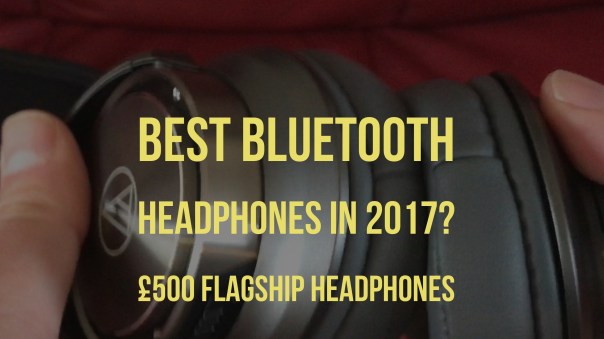
Audio Technica ATH-DSR9BT Review. £499 of world class technology providing hi-res bluetooth and USB Audio sound. These are pure digital headphones meaning there is no headphone jack. Actually there isn’t a DAC either.
The ATH-DSR9BT feature an exclusive “Pure Digital Drive” system keeps audio signal completely digital from source to driver for exceptionally pure sound. This is a first. A Dnote chipset controls driver amplitude directly with digital signals – no DAC converter required.
The Key Features / Specification
– Features Qualcomm aptX HD, aptX, AAC and SBC codecs, enabling wireless transmission with a resolution up to 24-bit/48kHz.
– 45mm True Motion Driver, with 4-core twisted OFC-7N voice coil and diaphragm with diamond-like carbon coating.
– Mic and volume/control switch are built into the earcup for convenient control of smartphones and other Bluetooth wireless devices / NFC touch pairing.
– Save up to “eight” Bluetooth wireless devices paired.
– LED indicators display pairing, charging status, battery level, and the codec currently in use.
– Heat-reactive soft foam earpads and an easily adjustable leather headband provide a comfortable fit with outstanding sound isolation
– Internal battery provides approximately 15 hours of continuous use (1000 hours on standby) on a full charge
– Includes a 2.0 m (6.6′) USB cable, for charging and Hi-Res Audio playback, and hard carrying case
– Frequency Response – 5 to 45,000 Hz / Sensitivity – 97 ohms / Impedance – 38 ohms / Weight – 310g
– Microphone -condenser/Sensitivity -44 dB (1V/Pa a 1 kHz)/Frequency Response 50 – 4,000Hz /omnidirectional
– Input Jack: Micro USB Type B
– Communication System: Bluetooth Version 4.2 / Bluetooth Specification Power Class 2
– Maximum Communication Range: Line of sight – approx. 10 m (33′) / Profiles: A2DP, AVRCP, HFP, HSP
As you can see from the key features and specifications noted above, these ATH-DSR9BT are certainly something special and in terms of absolute sound quality are the best so far in 2017. However, I personally did not like them, so check out my review below to find out the incredible highs and disappointing lows.
The headphones were tested using an iPhone 7 Plus (bluetooth AAC), LG G6 (APT-X HD, USB Audio using USB Audio Player Pro & Tidal), MacBook Pro (USB Audio and APT-X).
Audio Technica ATH-DSR9BT First Impressions and Unboxing. The ATH-DSR9BT are over-ear wireless headphones that feature a lot of crazy bluetooth technology to deliver 24bit hi resolution sound. Plus they connect via USB for a true digital connection. No headphone jack required! Actually there isn’t a headphone jack. These are true digital headphones through and through.
So as an example with my Mac or PC they connect via a USB cable with a huge frequency range as shown below. With my LG G6 they can also connect via the USB connection or via Bluetooth APT-X HD (24bit/96) Hi Resolution bluetooth.
The Key Features / Specification
– The ATH-DSR9BT feature an exclusive “Pure Digital Drive” system keeps audio signal completely digital from source to driver for exceptionally pure sound. This is a first.
– Dnote chipset controls driver amplitude directly with digital signals – no D/A converter required.
– Features Qualcomm aptX HD, aptX, AAC and SBC codecs, enabling wireless transmission with a resolution up to 24-bit/48kHz.
– 45mm True Motion Driver, with 4-core twisted OFC-7N voice coil and diaphragm with diamond-like carbon coating.
– Mic and volume/control switch are built into the earcup for convenient control of smartphones and other Bluetooth wireless devices / NFC touch pairing.
– Save up to “eight” Bluetooth wireless devices paired.
– LED indicators display pairing, charging status, battery level, and the codec currently in use.
– Heat-reactive soft foam earpads and an easily adjustable leather headband provide a comfortable fit with outstanding sound isolation
– Internal battery provides approximately 15 hours of continuous use (1000 hours on standby) on a full charge
– Includes a 2.0 m (6.6′) USB cable, for charging and Hi-Res Audio playback, and hard carrying case
– Microphone -condenser/Sensitivity -44 dB (1V/Pa a 1 kHz)/Frequency Response 50 – 4,000Hz /omnidirectional
– Input Jack: Micro USB Type B
– Communication System: Bluetooth Version 4.2 / Bluetooth Specification Power Class 2
– Maximum Communication Range: Line of sight – approx. 10 m (33′) / Profiles: A2DP, AVRCP, HFP, HSP
First Impressions and Unboxing
As you can see from the key features and specifications noted above, these ATH-DSR9BT are certainly something special and I can’t wait to spend more time with these and share my findings both negative and positive. And there are both.
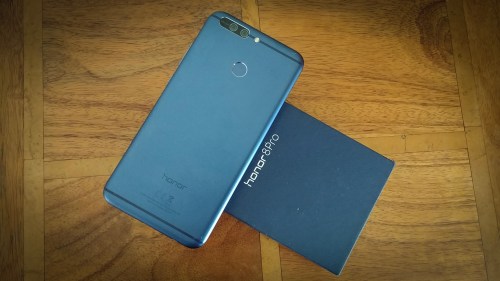
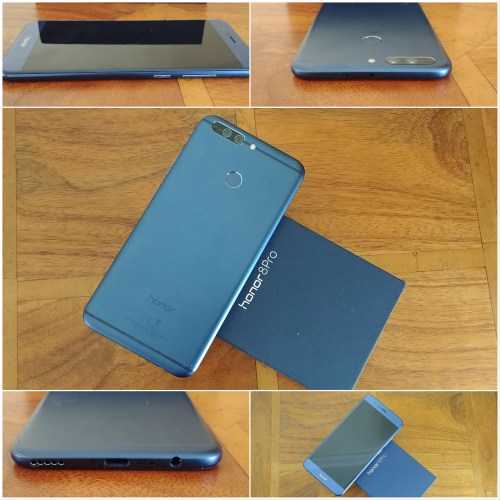
The Honor 8 Pro review. Just how much better is the “Pro” version of the Honor 8? Quite a lot as it turns out. So first lets take a look at the key specifications and differences –
The Key Specifications
– 5.7 inch, 2560 x 1440 Quad HD display, 515 ppi
– Kirin 960 octa-core (4x 2.4 GHz + 4x 1.8 GHz)
– 6 GB RAM, 64 GB ROM
– Android 7 (Nougat)
– EMUI 5.1
– 12 MP + 12 MP dual-lens camera
– USB-OTG
– IR Blaster
– 184 grams
– 4,000 mAh battery
– 6.97mm thick
– Cardboard VR inside box
The Honor 8 Pro includes the Kirin 960 processor along with 6gb ram and 64gb storage. This phone flies. It is fast and nimble at everything I have thrown at it. AnTuTu clocked in at 150,000. And checking the storage speeds showed its storage was UFS 2.1.
What these baseline specs translate into is a phone that delivers the best performance for gaming, streaming and photography. All this capability is backed up by a large 4.000 mAh battery which works in tandem seamlessly with the latest SmartPower 5.0 technology, providing up to two full days of run-time from a single charge. Typically I managed 6.5 hours screen on time with excellent standby times.
The Honor 8 Pro is ultra-thin at just 6.97mm body, yet it has a QHD resolution screen which looks gorgeous with decent viewing angles. The phone box also doubles up as a VR cardboard headset. Jaunt VR app is included on the phone.
The Honor 8 Pro incorporates its third generation 12-megapixel dual-lens camera. The two lenses work in tandem to deliver the perfect shot – the monochrome lens captures a black-and-white image with incredible depth of detail, while the RGB lens ensures vivid colour reproduction. The camera’s wide aperture range (f/0.95–f/16) delivers DSLR-like depth of field effects, for both photo and video shooting. It has been evident from my time testing the Honor 8 Pro that the Kirin 960, 6gb ram and improved post processing has made improvements on the picture and video quality. I have included an epic camera showcase to highlight this point.
The device also supports shooting of 4k videos encoded in the efficient H.265 codec, which produces files twice as small as its predecessor. And EMUI 5.1 introduces Highlights, a new feature co-developed with GoPro that intelligently organises photos by category and automatically generates video stories that are easily customisable.
Below are a few samples from the camera, but to see the full camera showcase covering video and stills, check out the video review below.
Above shot taken in wide aperture mode. Really cool photo.
Lovely close up of the blue bells.
The detail on the water droplets is excellent.
Plus there is so much more to this phone, so lets continue to part 2 of my review and watch the video below. My video review also discussed the camera differences between various Honor and Huawei phones too.
Video Review
Camera Showcase
Conclusion
The Honor 8 Pro is a smashing phone with good battery life, looks, excellent camera and more and all for just £474.99. Highly recommended.
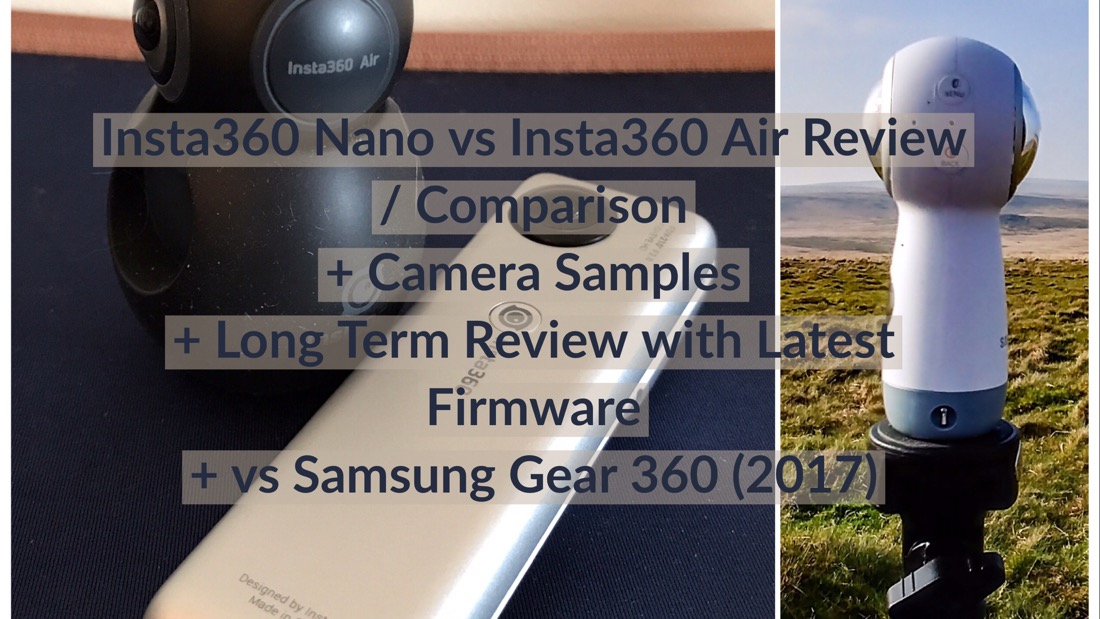
Insta360 Nano Review and Insta360 Air Review. The Nano works with your iPhone and the Air on an android phone. Both are 360 degree cameras that take photo, video and live stream to many places e.g. Youtube and Facebook.
The Insta360 cameras come with the best mobile apps that are ahead of that provided by Samsung for their Gear 360 (2017). Why? Find out in my video review.
The video review provides a practical in depth review of both cameras. The main review include some sample footage that I could embed however there were many modes that were not included and consequently are shown below. My review also includes a DIY way to attach the Insta360 Nano to an iPhone whilst it is still in a case.
Finally, I have also provided a comparison between the two Insa360 cameras along with my views using these with the Samsung Gear 360 (2017). At the end of this post, I have all the useful links.
Video Review
360 Degree Photos – Normal and then HDR
360 Degree Video – Normal and then Low Light
360 Photos made into Animations (several options and all very cool)
Asus Zenfone 3 Zoom review. The phone with killer specs and a killer camera setup. So how does it perform in the real world? Well let’s find out. First the key specifications.
Key Specifications
– Colours – Black, Silver and Pink
– Dimensions – 154 x 77 x 7.99mm
– Weight – 170g
– 5.5 inch 1080p IPS screen. 500 nits brightness. Gorilla Glass 5.Blue light filter, Oleophobic coating. 10 point multitouch. Over 100% NTSC high colour gamut.
– Snapdragon 625. Adreno 506 GPU.
– 3/4gb ram with 32gb/64gb storage. eMMC storage
– Main Camera – ASUS SuperPixel™ Technology for 2.5 times light sensitivity compare with iPhone 7 Plus,12 megapixels, f/1.7 aperture, SONY IMX362 sensor (1/2.55″ large sensor size, 1.4 µm large pixel size),Focal Length 25mm,6p lens, 82° field of view,
– 4-axis, 4 stops Optical Image Stabilization for steady photos, 3-axis Electronic Image Stabilization for shake-free videos,
– 4K UHD (3840 by 2160) 30 frame per second video recording,
– Colour correction (RGB) sensor for the best white balance and natural-looking colours, Dual-LED real tone flash,
– ASUS Exclusive TriTech+ Auto Focus system with 0.03s instant focus:
– World leading fastest Dual Pixel PDAF (100% pixel used for focusing)
– 2nd generation Laser auto-focus, 3 times distance than previous generation
– Subject tracking auto-focus for both photos and videos
– Zoom Rear Camera – 12 megapixel, 12 times total zoom, 2.3 times optical zoom, Focal length 59mm,5p lens
– PixelMaster 3.0 camera modes: Auto (default),Manual,HDR Pro,Beautification,Super Resolution,Children,Low Light, QR code, Night,Depth of Field, Effect, Selfie, GIF Animation, Panorama, Miniature, Time Rewind, Smart Remove, All Smiles
– Video – 4K video recording (3840 by 2160) at 24 fps, 1080p HD video recording at 30 fps, 720p HD video recording at 30 fps, 3-axis electronic image stabilisation, Take still photo while recording video
– Front Camera – 13 megapixels photos, SONY IMX214 sensor (1/3.06″, 1.12um),f/2.0 aperture, Screen flash
– PixelMaster 3.0 camera modes: Beautification, Selfie Panorama,Auto (default),Night,HDR Pro,Effect,Low Light, GIF Animation, Slow motion,Time Lapse
– Audio – Speaker 5-magnet speakers with NXP Smart Amp for up to 4 times better performance,
– Audio Output Hi-Res audio 192kHz/24-bit standard that is 4 times better than CD quality
– DTS (Digital Theater System) for headphone support
– Mic Dual internal mic with ASUS Noise Reduction Technology
– FM Receiver, FM radio
– 802.11 b/g/n, Bluetooth 4.2, Wi-Fi direct
– GPS, A-GPS, GLONASS, BDSS
– SIM 1: 2G/3G/4G Nano SIM Card
– SIM 2: 2G/3G/4G Nano SIM Card
– Dual SIM dual standby, SIM 2: Only use the Nano SIM card or the MicroSD card at a time
– Both SIM card slots support 3G WCDMA / 4G LTE network band. But only one SIM card can connect to 3G WCDMA / 4G LTE service at a time
Networks – FDD-LTE, TD-LTE, TD-SCDMA (CN Version), WCDMA/HSPA+/DC-HSDPA, GSM/GPRS/EDGE
– Data rate LTE Cat4: UL 50 / DL 150 Mbps (WW/US/BR/IN/ID version),DC-HSPA+: UL 5.76 / DL 42 Mbps
– US version reviewed – FDD-LTE (Bands 1, 2, 3, 4, 5, 7, 8, 17, 28),WCDMA (Bands 1, 2, 4, 5, 8)
GSM (850, 900, 1800, 1900 MHz) Other versions have different bands
– Battery – 5000mAh (non-removable), 1A Reverse Charging
– Power adapter – Output: 5V 2A 10W
– In The Box – ZenFone 3 Zoom with Android™ 6.0 and ASUS ZenUI 3.0, ASUS ZenEar with Mic, USB-C Cable, Ejector Pin, USB Power Adapter, Documentation (User Guide, Warranty Card)
– Asus ZenUI 3 – includes ZenFit (uses camera to measure heart rate) ,launcher, fingerprint sensor, file manager, themes, zenmotion, game genie, camera, photo collage, mini movie, zencircle, keyboard, phone, contacts, weather, clock, calculator, do it later, mobile manager, zenfone care
Asus really do think of everything when it comes to features. Some are more useful than others. Like everything you use the ones you want and turn off what you don’t need. Anyway, head over and watch my full 20 min review of the Asus Zenfone 3 Zoom with camera showcase covering the zoom capabilities and much more.
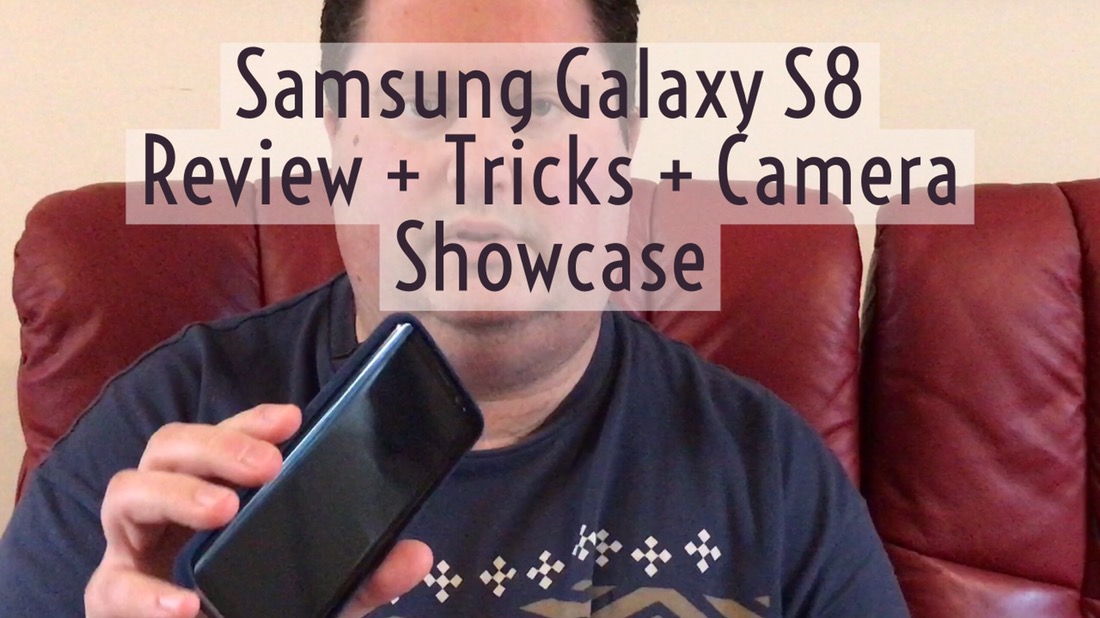
Samsung Galaxy S8 review. Welcome to my review of the Samsung Galaxy S8 which includes a video and photo camera showcase, some tips and tricks, the pros and cons and much more.
I have already published camera samples and a 4 way camera comparison between the S8, Huawei P10 Plus, LG G6 and iPhone 7 Plus Click Here.
So let’s take it away for Samsung’s flagship phone.
Asus Zenfone 3 Zoom impressions Day 2. Lots to talk about but so little time so I will try and cover off some points.
That 5,000mAh battery is epic. 2 days heavy use should be straight forward. 10% lost in 13 hours. 35% in a day which included using the camera. The power management is super smart with a couple of slick options which I will cover off in my main review.
The front camera does slow motion video as well as the rear. 4K video from the rear. 1080p from the front.
The audio system is consumer friendly. It has a slight presence towards the bass, producing a full, powerful and fun sound. Just not the bleeding edge in neutrality for audio, although it does manage hi res audio and include apt-x. I need to spend some more time with the audio though to decide where it fits in my scoring.
So below are the first 7 shots from the camera.I intend to go through the options in a lot more depth. Just remember this phone costs £330 which is over half the cost of an iPhone 7 Plus.
Close up of some bushes. There is a slight softness on close up shots.
Both the shots above and below look good.
All photos shot in auto mode.
Sky looks quite good too.
I love this shot of my local church. Captured the mood really well. This was just before a hailstorm.
After dusk I took the shot of the dandelions.
The sky looks great last night.
So there you have it so far. Plenty plenty more to cover off.
Samsung Gear 360 2017 Review. This is my review of the Samsung Gear 360. I used it on my Samsung Galaxy S8, iPhone 7 Plus and MacBook Pro. The review covers all modes, the pros and cons, the differences using it on a Samsung S8, iPhone 7 Plus or Mac.
Plus there are sample footage of all modes below, with links. This page will get updated as more 360 footage is captured and or any updates arrive that impact the experience good or bad.
The Blockbuster Review of the Samsung Gear 360 2017
Samsung Gear 360 2017 Live Broadcast Sample Footage
Below is a sample of the footage from a live broadcast using the Samsung S8. This was at max quality. Unfortunately the duration is shorter than expected as I lost cell signal.
Samsung Gear 360 2017 4K Video Sample
Samsung Gear 360 2017 Video Looping Mode Sample
Samsung Gear 360 2017 Time Lapse Mode Sample
Samsung Gear 360 2017 Photos
I have embedded the photos below with full 360 and VR headset support. Just click play. If you are wearing a VR headset press the icon top right. I have also uploaded these to my Flickr and Google Photos accounts. Links are at the end of the review.
Landscape HDR photo mode
Normal Photo Mode
Normal Photo Mode HDR on
Low Light Photo
Conclusion
The new Samsung Gear 360 2017 is a win. Much easier to use than last years, easier to hold and good quality output.
LG G6 review. Welcome to my review of the LG G6. This is Korean G600 version of the LG G6 being reviewed. This review has been compiled by massive input from my wife Ellie and additional input by myself.
The Korean version features double the storage at 64gb versus 32gb for the UK. In addition it has a 32 bit quad DAC which can power headphones up to 600 ohms. If your reading this from the USA, you don’t get 64gb or the quad DAC but you do get wireless charging. Come on LG, one model with an equal feature set please across all markets next time!
Key Specifications
– Body: Aluminum frame, Gorilla Glass 3 front, Gorilla Glass 5 back; chamfered LCD for impact resistance; IP68 certified for water and dust resistance, 148.9 x 71.9 x 7.9 mm
– Display: 5.7″ IPS LCD, 2,880x1440px resolution, 18:9 (2:1) aspect ratio, 565ppi; HDR 10 and Dolby Vision compliant.
– Dual 13 MP rear cameras (f/1.8, OIS, 3-axis, phase detection AF) + 13 MP (f/2.4, no AF), dual-LED flash, check quality, 1/3″ sensor size, 1.12 µm pixel size
– 24-bit/192kHz stereo sound recording mics
– Front camera 5 MP, f/2.2, 1080p video
– Rear camera: 13MP f/1.8 primary camera with 71° field of view, OIS. Additional 13MP f/2.4 wide-angle camera with 125° FOV, no OIS. 1.12µm pixel size on both. 2160p/30fps video recording on both.
– Chipset: Qualcomm Snapdragon 821; quad-core CPU (2xKryo@2.35GHz + 2xKryo@1.6GHz), Adreno 530 GPU.
– Memory: 4GB of RAM; 32GB/64GB storage (region dependent); microSD slot for cards up to 2TB (practically up to 256GB).
– Battery: 3,300mAh Li-Po (sealed); QuickCharge 3.0 fast charging; WPC&PMA wireless charging (US version only).
– Misc: Fingerprint reader; ; 2 mics, single speaker on the bottom; 3.5mm jack.QUAD DAC
– LG G6 G600 Bands – GSM 850/900/1800/1900, HSDPA 850/900/1900/2100, LTE : B1, B2, B3, B4, B5, B7, B8, B12, B17, B20, B26, B38, B39, B40, B41
– Wi-Fi 802.11 a/b/g/n/ac, dual-band, Wi-Fi Direct, DLNA, hotspot
– Weight 163g
– Fast Charging QC3 – 50% in 30 mins
Phone Basics
The LG G6 features a 18:9 aspect ratio meaning the phone is narrow. By far it is the easier phone to hold and manage with one hand. It is doesn’t feature and curved edges, just a practical flat edge to grip. It is also drop proof too as would have noticed from the specification, something the iPhone 7 Plus or Samsung S8 doesn’t feature. The LG G6 is water and dust resistant too. The HDR+ screen is beautiful with good viewing angles. It comes with average readability in bright sunlight. The best screen for sunlight readability comes from the S8. Battery life will last a day, predominately because the standby drain is non existent. Screen on time is 4.5 hours in my heavy setup. Fortunately, the G6 comes with quick charge 3. I haven’t needed to top it up yet during the day, although I did get close one day.
Cellular coverage is excellent. It pulls LTE when Gavin’s iPhone 7 Plus on the same network is only receiving 3g. Bluetooth is superb. WiFi has been buggy from time to time. After phone has been in standby for sometime, if I went to use WiFi it shows connected, but I have had to toggle WiFi on and off for it to be working properly.
Audio vs Quad DAC Audio
If you are in the UK or USA the standard built in DAC is still excellent and IMO better than that found on the S8 or even the iPhone 7 Plus. The standard G6 also has APT-X HD, a Hi-Res Bluetooth codec providing 24bit audio over bluetooth with a compatible headphone. Fortunately, I have been able to test this APT-X HD and the quality is exceptional. However, even normal APT-X is top notch. My AirPods sound better on the G6 than on any other phone including the iPhone 7 Plus or S8.
Now lets introduce the Quad DAC. Plug in some decent wired headphones or any wired headphone to be honest. Sit back in your favourite chair and be prepared to be blown away. The Quad DAC works with headphones up to 600 ohm. I would personally recommend using no more than 300 ohm to get the optimal balance.
Camera
The LG G6 cameras are excellent. With both rear cameras at 13mp the balance is near perfect. Ellie did a 4 way camera comparison with the iPhone 7 Plus, Samsung Galaxy S8, Huawei P10 Plus and LG G6 – CLICK HERE. The LG G6 often nailed the shot better than all the other phones, although the difference is minimal now. So now its about dual lenses and the features these add to the pot. The G6 camera app is great. Lots of ways to take a photo or video in auto, but then there is a brilliant manual mode for photo and video, both of which are better by far than that found on the Samsung Galaxy S8. Square mode and all the other camera modes work really well and are fun to use. See the camera showcase for examples of each option.
Video Review
Camera Showcase Video
Conclusion
Ellie – Gavin gave me the LG G6 to take some photos and provide some first impressions. I haven’t given it back to him. It is brilliant. I adore the camera, phone and everything about it.
Gavin – Looking at the G6 versus the completion it is by far my favourite phone. The headphone output is tremendous and looking at the photos Ellie has captured makes me very envious that she has the G6 and not myself.







 Gavin's Gadgets & Photography