Tech Addicts Podcast is back again with a new episode starring Gareth Myles, Jay Garrett, Leila Gregory, Brendan Arndt and myself. Tech Addicts is released every week. Twitter: @garethmyles ; @gavinfabiani ; @GadgetyNewsCom ; @JayGarrett ; @swanny ; @girlsngadgets ; @wildlime
To listen to the latest episode subscribe by searching “Tech Addicts” within your favourite podcast app, iTunes, Google Play Music Podcasts or use the URL “mobiletechaddicts.libsyn.com/rss” to add directly.
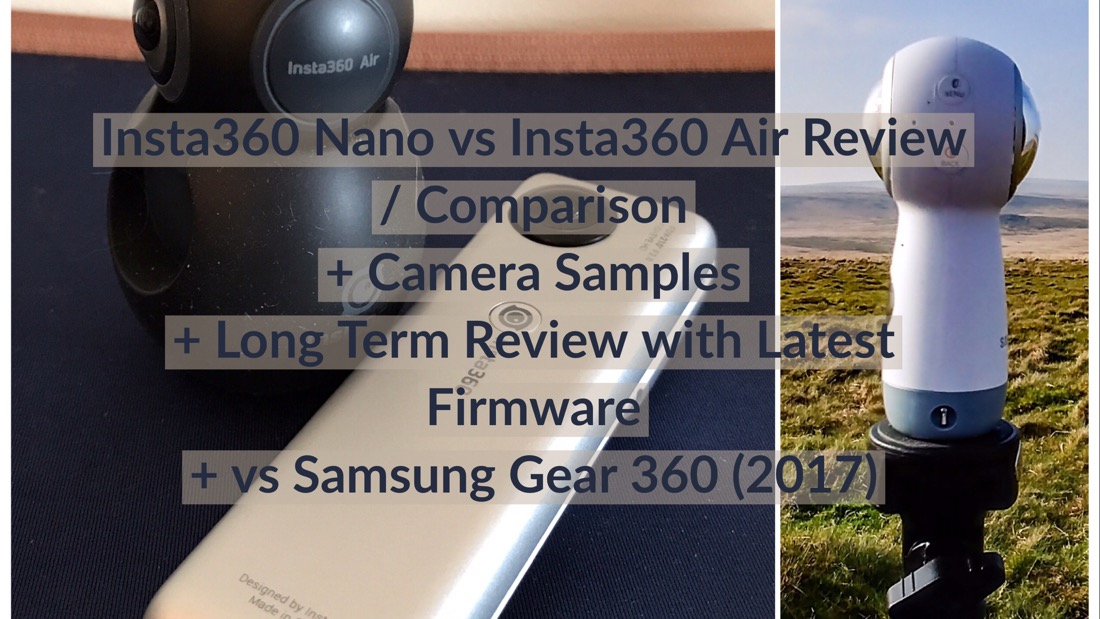
Insta360 Nano Review and Insta360 Air Review. The Nano works with your iPhone and the Air on an android phone. Both are 360 degree cameras that take photo, video and live stream to many places e.g. Youtube and Facebook.
The Insta360 cameras come with the best mobile apps that are ahead of that provided by Samsung for their Gear 360 (2017). Why? Find out in my video review.
The video review provides a practical in depth review of both cameras. The main review include some sample footage that I could embed however there were many modes that were not included and consequently are shown below. My review also includes a DIY way to attach the Insta360 Nano to an iPhone whilst it is still in a case.
Finally, I have also provided a comparison between the two Insa360 cameras along with my views using these with the Samsung Gear 360 (2017). At the end of this post, I have all the useful links.
Video Review
360 Degree Photos – Normal and then HDR
360 Degree Video – Normal and then Low Light
360 Photos made into Animations (several options and all very cool)
Earlier this morning, a powerful storm hit Princetown, Dartmoor for nearly two hours. I personally have never seen anything like it and it kept me awake for the duration.
Lightning was flashing continuously for nearly 90 mins. Spectacular and scary at the same time.
This is a 4K one minute video of the action. Nature is a wild machine sometimes.
I have been testing the Honor 8 Pro for a short while and am putting it through its paces. This phone really is a fine piece of technology but so is its dual rear camera lenses.
I will be doing my usual review, but for the meantime, check out these photos –
Above shot taken in wide aperture mode. Really cool photo.
Lovely close up of the blue bells.
Another wide aperture mode shot for a superb final product.
The detail on the water droplets is excellent.
Not so sure Tiggy wanted her face in the frame, but she is still super cute.
Truly stunning.
I will be testing the video quality in my full review which will be coming soon.
If you have any questions that you would like covered off in my review, please let me know.
Some of you by now will have realised that the video content embedded in my reviews are also shared on YouTube.
I use the combination of text, photos and videos to create a single review to provide the best possible review. Some people prefer just to watch a video. So.
If you haven’t subscribed directly to my YouTube channel then please click over here –
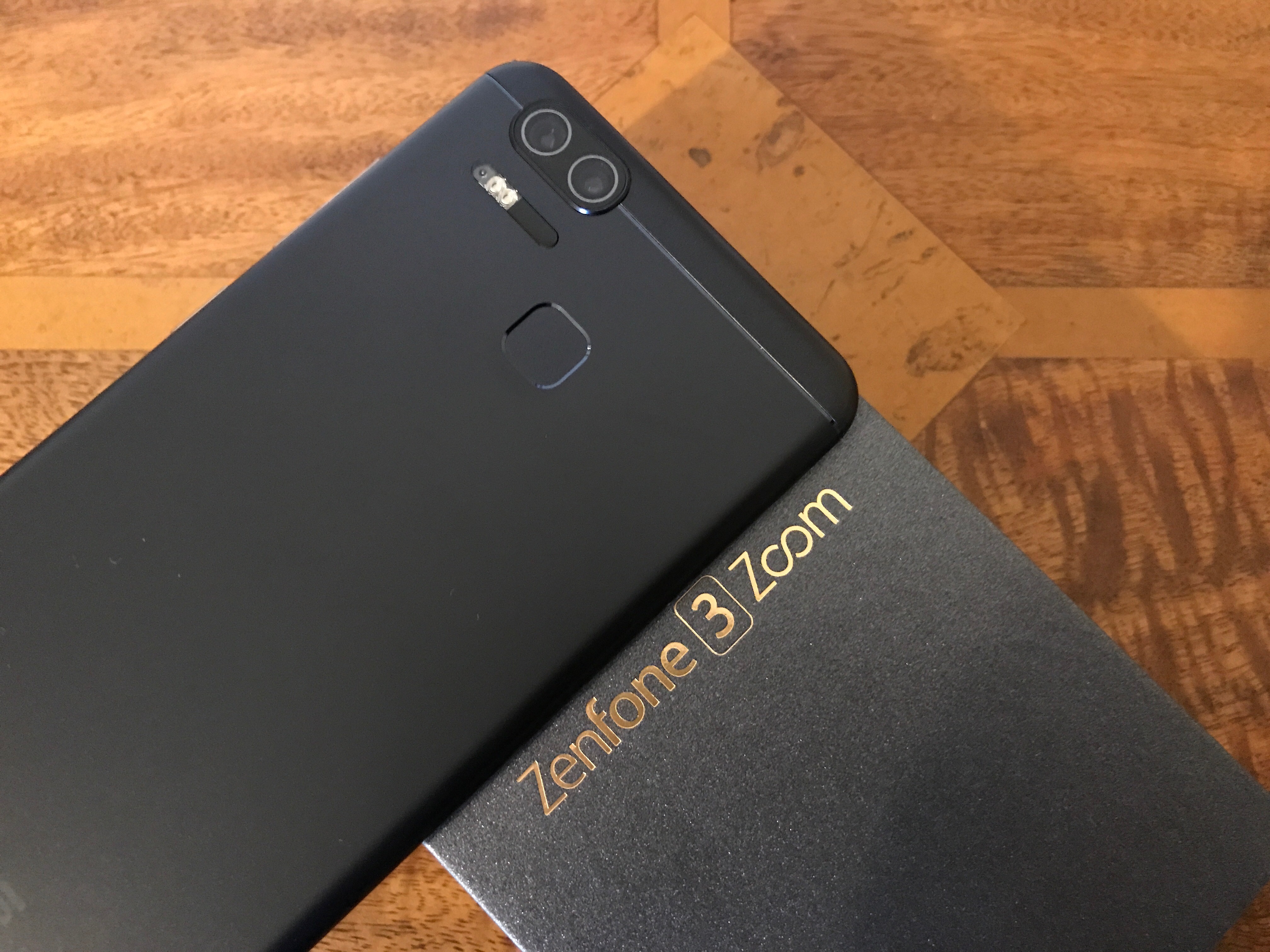
Asus Zenfone 3 Zoom review. The phone with killer specs and a killer camera setup. So how does it perform in the real world? Well let’s find out. First the key specifications.
Key Specifications
– Colours – Black, Silver and Pink
– Dimensions – 154 x 77 x 7.99mm
– Weight – 170g
– 5.5 inch 1080p IPS screen. 500 nits brightness. Gorilla Glass 5.Blue light filter, Oleophobic coating. 10 point multitouch. Over 100% NTSC high colour gamut.
– Snapdragon 625. Adreno 506 GPU.
– 3/4gb ram with 32gb/64gb storage. eMMC storage
– Main Camera – ASUS SuperPixel™ Technology for 2.5 times light sensitivity compare with iPhone 7 Plus,12 megapixels, f/1.7 aperture, SONY IMX362 sensor (1/2.55″ large sensor size, 1.4 µm large pixel size),Focal Length 25mm,6p lens, 82° field of view,
– 4-axis, 4 stops Optical Image Stabilization for steady photos, 3-axis Electronic Image Stabilization for shake-free videos,
– 4K UHD (3840 by 2160) 30 frame per second video recording,
– Colour correction (RGB) sensor for the best white balance and natural-looking colours, Dual-LED real tone flash,
– ASUS Exclusive TriTech+ Auto Focus system with 0.03s instant focus:
– World leading fastest Dual Pixel PDAF (100% pixel used for focusing)
– 2nd generation Laser auto-focus, 3 times distance than previous generation
– Subject tracking auto-focus for both photos and videos
– Zoom Rear Camera – 12 megapixel, 12 times total zoom, 2.3 times optical zoom, Focal length 59mm,5p lens
– PixelMaster 3.0 camera modes: Auto (default),Manual,HDR Pro,Beautification,Super Resolution,Children,Low Light, QR code, Night,Depth of Field, Effect, Selfie, GIF Animation, Panorama, Miniature, Time Rewind, Smart Remove, All Smiles
– Video – 4K video recording (3840 by 2160) at 24 fps, 1080p HD video recording at 30 fps, 720p HD video recording at 30 fps, 3-axis electronic image stabilisation, Take still photo while recording video
– Front Camera – 13 megapixels photos, SONY IMX214 sensor (1/3.06″, 1.12um),f/2.0 aperture, Screen flash
– PixelMaster 3.0 camera modes: Beautification, Selfie Panorama,Auto (default),Night,HDR Pro,Effect,Low Light, GIF Animation, Slow motion,Time Lapse
– Audio – Speaker 5-magnet speakers with NXP Smart Amp for up to 4 times better performance,
– Audio Output Hi-Res audio 192kHz/24-bit standard that is 4 times better than CD quality
– DTS (Digital Theater System) for headphone support
– Mic Dual internal mic with ASUS Noise Reduction Technology
– FM Receiver, FM radio
– 802.11 b/g/n, Bluetooth 4.2, Wi-Fi direct
– GPS, A-GPS, GLONASS, BDSS
– SIM 1: 2G/3G/4G Nano SIM Card
– SIM 2: 2G/3G/4G Nano SIM Card
– Dual SIM dual standby, SIM 2: Only use the Nano SIM card or the MicroSD card at a time
– Both SIM card slots support 3G WCDMA / 4G LTE network band. But only one SIM card can connect to 3G WCDMA / 4G LTE service at a time
Networks – FDD-LTE, TD-LTE, TD-SCDMA (CN Version), WCDMA/HSPA+/DC-HSDPA, GSM/GPRS/EDGE
– Data rate LTE Cat4: UL 50 / DL 150 Mbps (WW/US/BR/IN/ID version),DC-HSPA+: UL 5.76 / DL 42 Mbps
– US version reviewed – FDD-LTE (Bands 1, 2, 3, 4, 5, 7, 8, 17, 28),WCDMA (Bands 1, 2, 4, 5, 8)
GSM (850, 900, 1800, 1900 MHz) Other versions have different bands
– Battery – 5000mAh (non-removable), 1A Reverse Charging
– Power adapter – Output: 5V 2A 10W
– In The Box – ZenFone 3 Zoom with Android™ 6.0 and ASUS ZenUI 3.0, ASUS ZenEar with Mic, USB-C Cable, Ejector Pin, USB Power Adapter, Documentation (User Guide, Warranty Card)
– Asus ZenUI 3 – includes ZenFit (uses camera to measure heart rate) ,launcher, fingerprint sensor, file manager, themes, zenmotion, game genie, camera, photo collage, mini movie, zencircle, keyboard, phone, contacts, weather, clock, calculator, do it later, mobile manager, zenfone care
Asus really do think of everything when it comes to features. Some are more useful than others. Like everything you use the ones you want and turn off what you don’t need. Anyway, head over and watch my full 20 min review of the Asus Zenfone 3 Zoom with camera showcase covering the zoom capabilities and much more.
The best phone of 2017 according to my views and usage testing a wide range of flagships, budgets and medium priced phones.
The answer is not quite straight forward and here’s why.
The problem with the top end flagship is often design. Made with materials to make the phone look gorgeous but ultimately with poor grip meaning a case is a must have. The other problem is QHD or 4K screens and still with a 3,000mAh battery. I have used the Lenovo P2 and recently the Asus Zenfone 3 Zoom both of which have 5,000mAh batteries or more. Once you have experienced a battery of this capacity that lasts 2 days, you realise how much you have become a victim to constant charging of your phone.
Now if you have a big battery you need quick charging. Really fast charging if possible. Qi wireless charging is a bonus if included. But if you have a monster sized battery the need for wireless charging is negated.
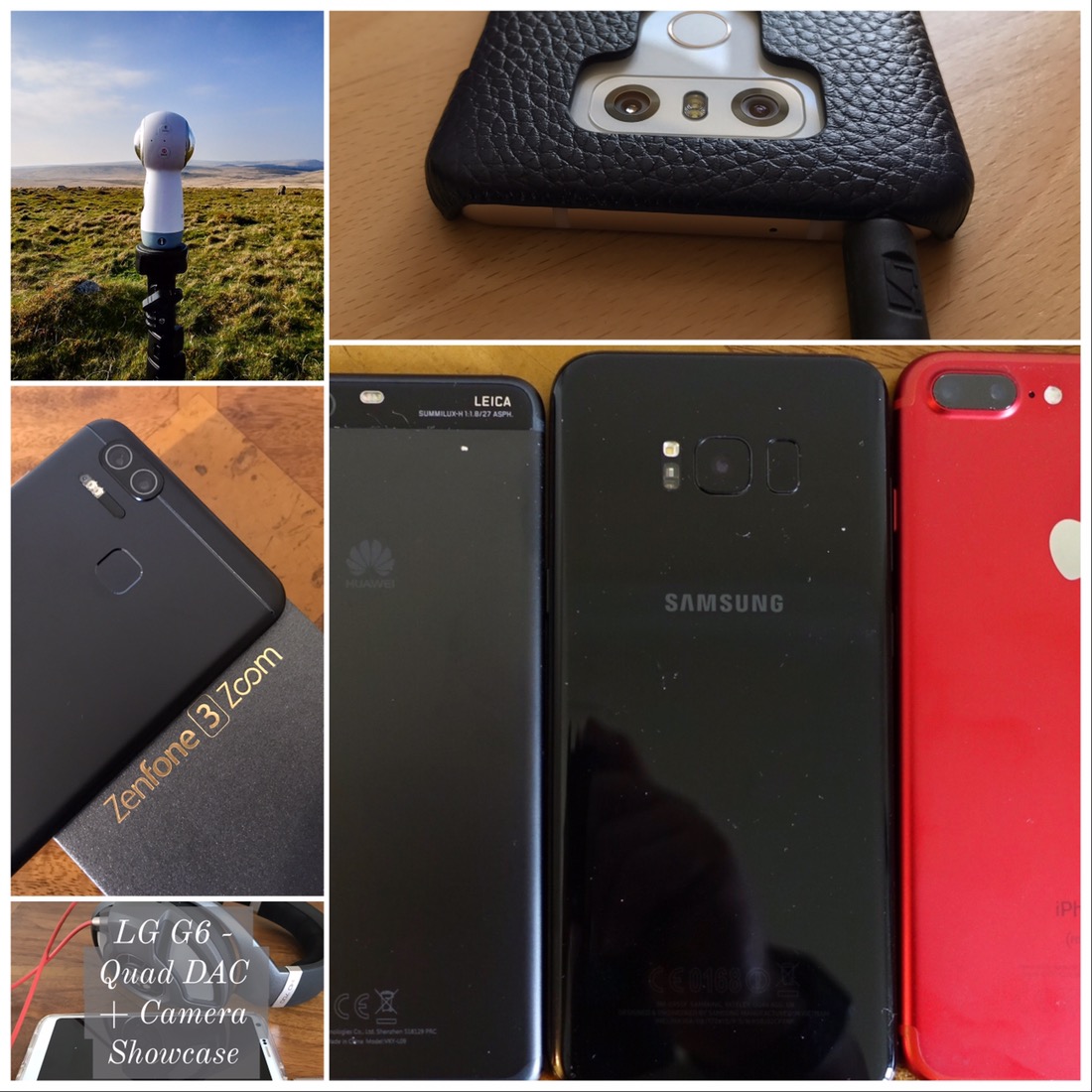
Cameras. The best phone of 2017 needs the photo quality of shots from the iPhone 7 and Samsung S8. Plus HDR quality of the Google Pixel. The phone camera needs ultra fast focusing of the Samsung S8. The microphones need to be as good as those from the S8 and have auto focusing front facing camera with OIS and one that can record QHD stereo. Then the camera needs the optical zoom and portrait mode of the iPhone 7 Plus, the monochrome lens from the Huawei P10 Plus and the wide angle lens of the LG G6. In terms of the default camera app, this needs to be a cross of the Samsung S8 and Huawei P10 Plus. It needs to include all the manual controls at your fingertips but the simplicity of working every time perfectly in auto. The camera app needs to include the special light painting and wide exposure modes of the Huawei camera app.
When it comes to audio the best phone of 2017 needs the quad dac from the LG G6 along with its Bluetooth stack and aptx HD. The headphone jack needs to remain. Stereo speakers with the minimum quality of the iPhone 7 Plus but ideally at the level of the HTC U 11.
When it comes to screens this is a one horse race. The phone needs a panel from the Samsung S8. So than means a phone with a 6 inch screen with minimal bezels meaning it’s a big as 5 inch phone from several years ago.
In terms of durability this needs to be at the level of the LG G6. IP68 dust and water resistant along with a MIL spec for drop resistance.
Finally the crucial aspect of any phone is the software and processor. A phone needs the processor from the latest iPhone. Powerful yet efficient. In terms of software, it needs to run a merging of iOS and Google android. iOS needs the google assistant merged with Siri. The Apple cloud services replaced with the Google cloud including Google Photos.
So summarising the best phone of 2017 will have 3 lenses, normal, wide and optical zoom, a 5,000 mah battery, stereo speakers, a headphone jack, 32 bit audio with a built in headphone amp, hi res Bluetooth, an amoled screen with minimal bezels , running andriOS, a great camera app and be durable against dust, water and accidental drops. Not much to ask for is it 🙂
Improvements for 2018 that I would like to see is a phone that can have one camera lens that merges all 3 options and wireless charging that works without having to place the phone on a pad.
Samsung Galaxy S8 review. Welcome to my review of the Samsung Galaxy S8 which includes a video and photo camera showcase, some tips and tricks, the pros and cons and much more.
I have already published camera samples and a 4 way camera comparison between the S8, Huawei P10 Plus, LG G6 and iPhone 7 Plus Click Here.
So let’s take it away for Samsung’s flagship phone.
Asus Zenfone 3 Zoom impressions Day 2. Lots to talk about but so little time so I will try and cover off some points.
That 5,000mAh battery is epic. 2 days heavy use should be straight forward. 10% lost in 13 hours. 35% in a day which included using the camera. The power management is super smart with a couple of slick options which I will cover off in my main review.
The front camera does slow motion video as well as the rear. 4K video from the rear. 1080p from the front.
The audio system is consumer friendly. It has a slight presence towards the bass, producing a full, powerful and fun sound. Just not the bleeding edge in neutrality for audio, although it does manage hi res audio and include apt-x. I need to spend some more time with the audio though to decide where it fits in my scoring.
So below are the first 7 shots from the camera.I intend to go through the options in a lot more depth. Just remember this phone costs £330 which is over half the cost of an iPhone 7 Plus.
Close up of some bushes. There is a slight softness on close up shots.
Both the shots above and below look good.
All photos shot in auto mode.
Sky looks quite good too.
I love this shot of my local church. Captured the mood really well. This was just before a hailstorm.
After dusk I took the shot of the dandelions.
The sky looks great last night.
So there you have it so far. Plenty plenty more to cover off.






 Gavin's Gadgets & Photography