From last week – Gav & Dave’s Tech Podcast is now live – Please RT

From last week.

As you know, I co-host a weekly podcast with David from UKMobileTech called Gav & Dave’s Tech Podcast. It is a light hearted tech podcast broadcast bi-weekly. To subscribe click here for iTunes or copy and paste this link into your favourite podcast app.

Episode 26 is now live for your listening pleasure.

If you have enjoyed the podcast, please leave a 5 star review in iTunes. It helps others find our podcast.

If you have any comments, questions or feedback, please drop a line at feedback@gdtpodcast.com .

Nvidia Shield Tablet – console mode and game recording

I spent a lot of time yesterday with the Nvidia Shield Tablet connected to my TV via the hdmi cable. I also was charging the tablet whilst gaming.

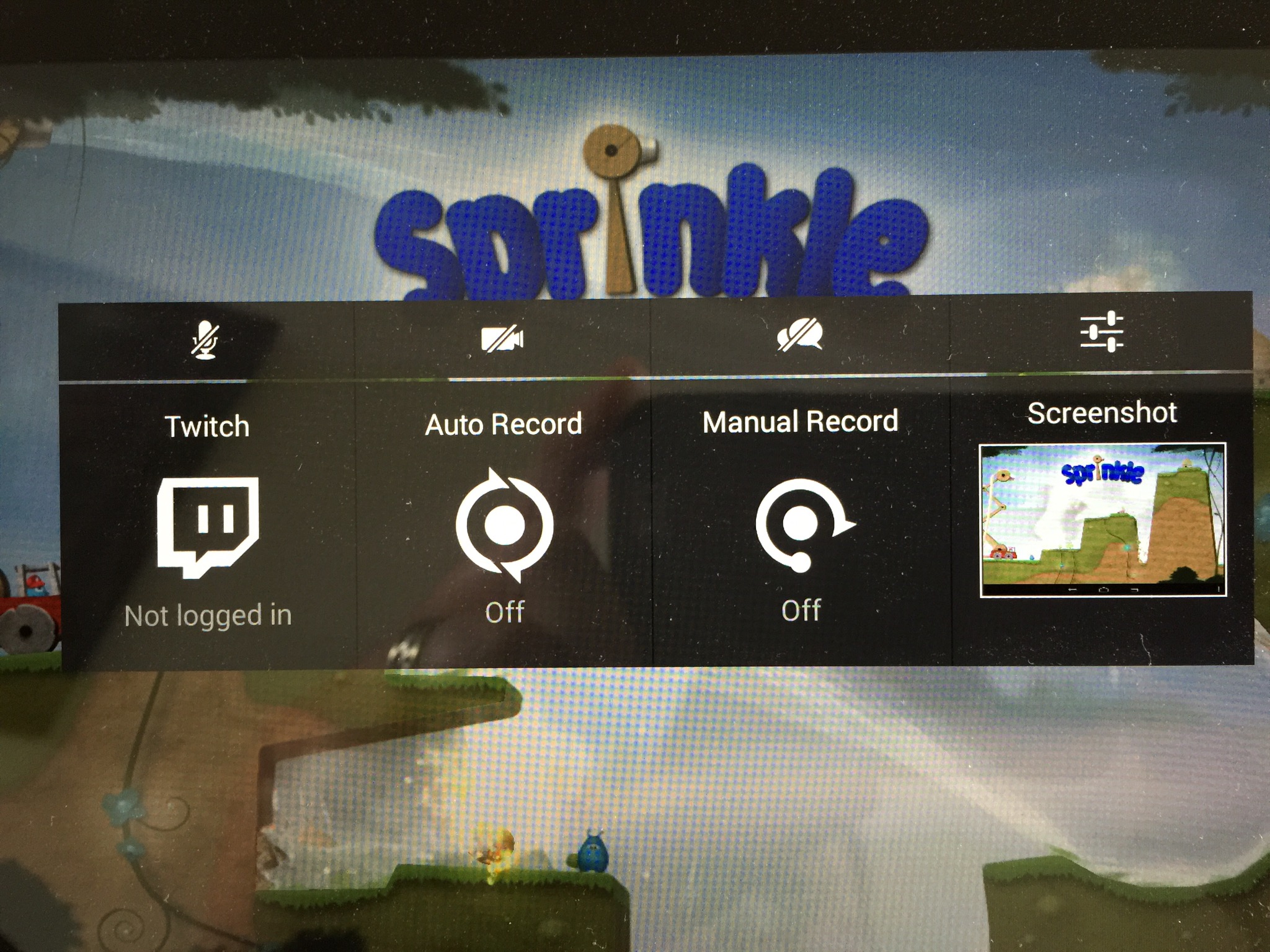
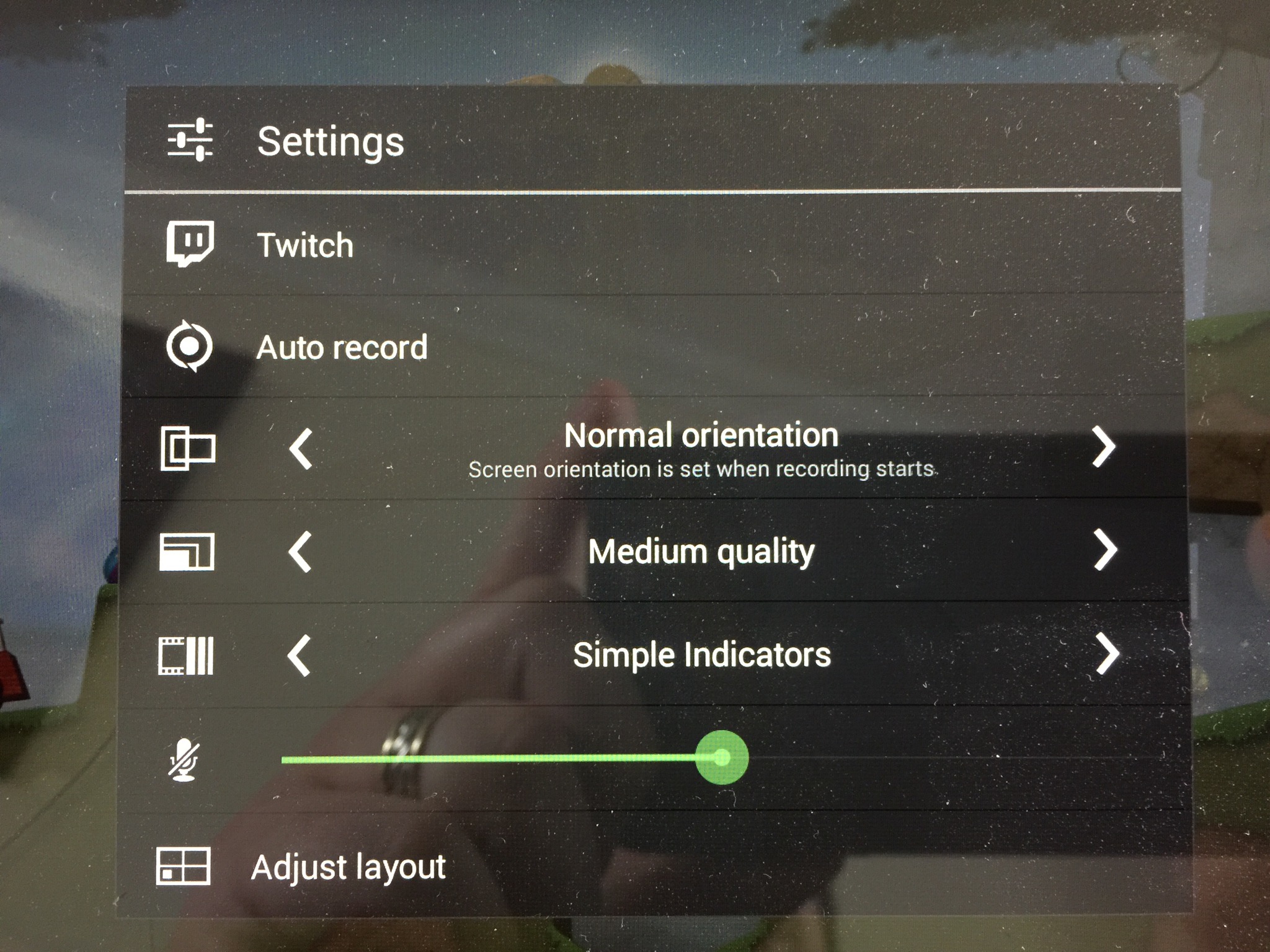
One of the features of the tablet is recording your game play as in screen recording or even that plus your actions whilst playing and screening this to the Twitch network.

Here are the options for recording and for the Twitch network recording.

IMG_1113.JPG

And the next screen.

IMG_1112.JPG

So here is Leo’s Fortune on the TV screen. In real life the colours and graphics looked lovely. Not sure the photo captures everything.

IMG_1109.JPG

And finally here’s a few games recorded whilst I was playing. I was playing these on the TV.

Why are there such shortages on new phones?

Samsung Note 4, Nexus 6 and other phones and smart watches all claimed to have been released. In fact, Samsung claimed to have shifted 4.5m Note 4 phones in the first month. Nexus 6 went on sale and supposedly sold out in minutes. Maybe only 10 phones were in stock at the warehouse.

So what is going on. Forums are alight with grieving users. Quite simply, either the phone production was sufficient from day one. Or there has been a manufacturing issue. Or Apple has hogged all the transit and cargo space for its new iPhones.

So what do you think ?

Nvidia Shield Tablet – hardware and cover review

IMG_1084_2

Today I am going to look at the Nvidia Shield Tablet hardware in more detail. I will start by stating this is not built to the same standards as the Apple iPad. Nor is its 1080p screen as good as the iPad. But it is nonetheless a decent enough screen by far.

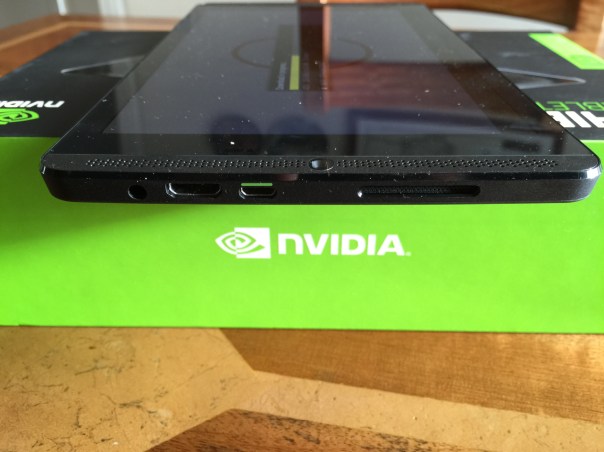
If you look at the photo above you can see on the screen side the right “front” loudspeaker. The stereo speakers are dual bass reflex port with built-in microphone. The sound from the left and right front speakers is reasonable and adds to the media enjoyment. You will notice sound also comes out of the side too, top right side slat. On the front screen side is also the 5mp front facing camera. The rear also has a 5mp front facing camera. I will cover off the cameras in another post, but needless to say the camera software included is more than expected. Going back to the right side, from the bottom right you can see the headphone jack, HDMI and then micro usb socket. You will notice the micro usb port has green paint on the top. The cable also has one side green, allowing for easier connecting.
IMG_1086

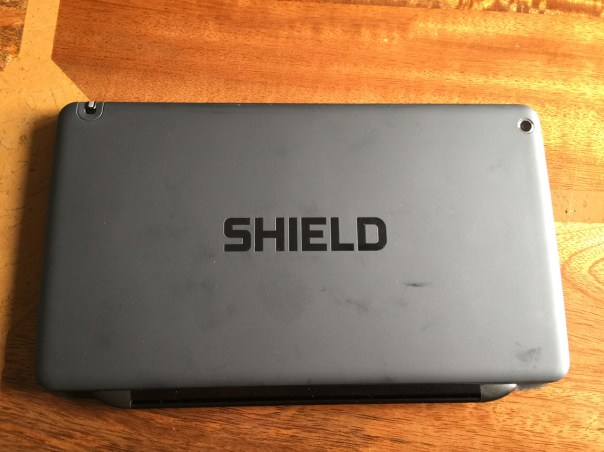
The rear is a soft plastic finish. Nothing special but easy to hold. It does show my fingerprints a little. On the rear you can see the 5mp rear camera and the stylus.
IMG_1081_2

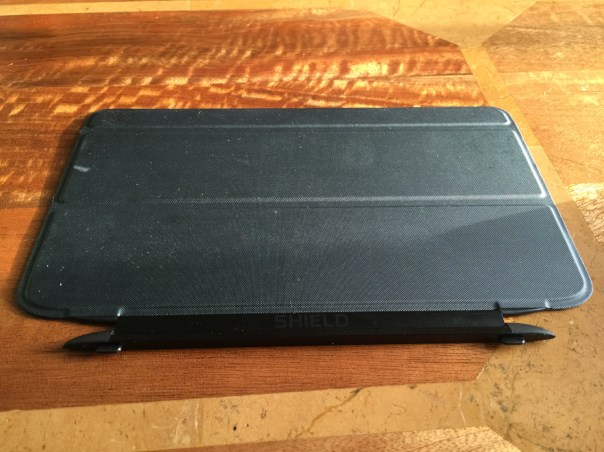
The Nvidia Shield cover is a smart cover. It has two stick out bits that slot in to the gaps on the side of the tablet. The cover is held in place by magnets and can only be held one way around. It is a strong magnetic connection. The cover has a keyboard, and two upright modes. Opening the cover turns the tablet on and off.

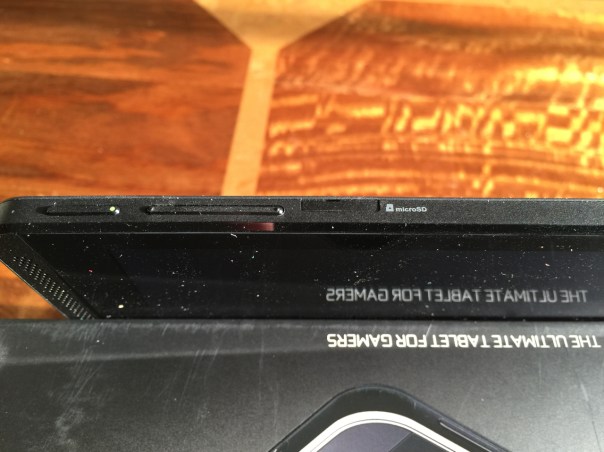
On the top edge is the power and volume controls. I must admit I find the power button fiddly to use.
The top edge also house the micro SD slot and micro SIM card as well as the stylus.
IMG_1082
IMG_1083

So overall the hardware is fine and to be honest I don’t miss my iPad, and at £239 for the 16 GB WiFi only model and £299 for the 32 GB LTE/WiFi it really is a great offering.

The full specs are as follows –

– Processor NVIDIA® Tegra® K1 192 core Kepler GPU, 2.2 GHz ARM Cortex A15 CPU with 2GB RAM
– Display 8-inch 1920×1200 multi-touch Full HD display
– Audio Front facing stereo speakers, dual bass reflex port with built-in microphone
– Storage 32 GB (WiFi+4G LTE) / 16 GB (WiFi-only)
– Wireless 802.11n 2×2 Mimo 2.4 GHz and 5 GHz Wi-Fi
– Bluetooth 4.0 LE
– GPS / GLONASS
– Connectivity WiFi+4G LTE or WiFi-only
– Mini-HDMI output
– Micro-USB 2.0
– MicroSD storage slot
– 3.5 mm stereo headphone jack with microphone support
– SIM Card Micro-SIM
– Motion Sensors 3-axis gyro
– 3-axis accelerometer
– 3-axis compass
– Gaming Features SHIELD wireless controller compatible
– NVIDIA GameStream™
– NVIDIA ShadowPlay™
– GRID Cloud Gaming Beta
– Console Mode
– Gamepad Mapper
– Cameras Front: 5MP HDR; Back: 5MP auto focus HDR
– Video Features 4K Ultra-HD Ready
– Stylus DirectStylus 2 with 3D Paint (Included)
– Software Updates SHIELD software upgrades directly from NVIDIA
– Battery 19.75 Watt Hours
– Weight and Size Weight: 13.7oz / 390g
– Height: 8.8in / 221mm Width: 5.0in / 126mm Depth: 0.36in / 9.2mm
– Operating System Android KitKat OS (Android 5.0 Lollipop ready)
– Software Google Play™, NVIDIA SHIELD Hub, Trine 2: Complete Story, Multi language Handwriting Recognition, NVIDIA Dabbler™, JusWrite, Evernote, Adobe Reader, Camera Awesome

-Cellular Connectivity
North America: Unlocked (compatible with AT&T, please check bands supported)LTE, HSPA+, 3G, 2G, GSM, EDGE
-Outside-North America: Unlocked (please check bands supported)LTE, HSPA+, 3G, 2G, GSM, EDGE
Cellular Bands North America:LTE: Bands 2,4,5,7,17 (1900, 1700, 850, 2600, 700)
HSPA+: Bands 1,2,4,5 (2100, 1900, 1700, 850)

Outside-North America:LTE: Bands 1*,3,7,20 (2100/1800/2600/800)HSPA+: Bands 1,2,5,8 (2100/1900/850/900)
* In certain regions band 1 and voice support is enabled
Microsoft launches the Microsoft Band – cross platform fitness band – details

microsoft-band_hero_2

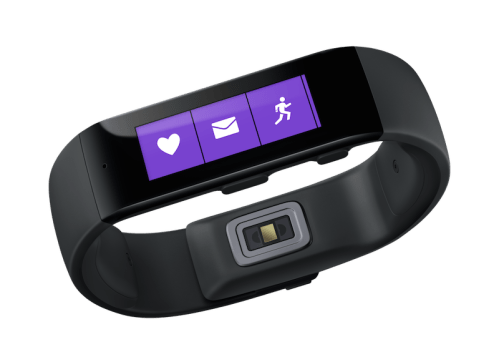
Microsoft has launched the Microsoft Band. It lasts 48 hours on a single charge and tracks all activity including your sleep. There are 10 sensors that track standard health statistics like heart rate, a UV sensor to measure sun exposure and galvanic skin response, which can identify stress. Like smart watches, the Band can also receive notifications from a user’s smartphone.

Full details of what it can do are –

– Activity tracking and goal setting : Heart rate monitor 24-hour heart rate monitor: Gives you a better understanding of your calorie burn, sleep patterns, and peak and resting heart rate so you can perform at your best.

– Run Run: Whether you’re on the treadmill at the gym or outdoors in the rain or sun, you can view your run summary on your band with personalized metrics in the phone app including pace splits and heart rate.

– Steps tracker Steps: Set a goal and track your progress. Microsoft Band calculates the calories you’ve burned and the distance you’ve traveled each day.

– Built in GPS Built-in GPS: Measures the distance you’ve run and tracks your pace and route. Save your favorites to retrace your steps and challenge yourself later.

– Calorie tracking Calorie tracking: Count the calories you burn each day. View daily or weekly stats, set goals, and receive a virtual “high-five” when you reach them.

– Sleep tracking Sleep tracking: When activated, Microsoft Band tracks the length and quality of your sleep. Analyze the sleep charts in your app to gain insights about your slumber.

– Guided workouts Guided Workouts: Fun and challenging workouts from fitness partners like Gold’s Gym, Shape, and Men’s Fitness with exercise prompts on the band and much more in the app.

-Goal setting Goal setting: Challenge yourself by setting daily step and calorie goals. Microsoft Band notifies you when you meet them so that you can stay motivated.

The Microsoft Band goes on sale for $199. Looks promising.

Source – http://www.microsoft.com/Microsoft-Band/en-us